0%

Choosing the right Aluminium Washroom Door can shape how a commercial restroom feels and performs every day. In offices, schools, hotels, and shopping centres, doors face repeated use, moisture, cleaning products, and occasional impact from carts or bags. A suitable system should balance durability, privacy, easy maintenance, and a consistent appearance. Small details matter.

This guide explores what to assess when comparing aluminium washroom doors for commercial projects in 2026. We look at frame construction, panel materials, hardware, finishes, ventilation, and installation conditions. A sturdy frame alone does not guarantee a reliable door; hinges, locks, edge protection, and accurate fitting matter too. Ask suppliers for clear product specifications and, where possible, evidence from comparable installations. Check dimensions, warranty terms, maintenance needs, and compatibility with the project’s layout before ordering.

There is no single specification for every site. A busy transport hub may need different hardware from a small office, while coastal humidity or frequent washdowns can affect finish choices. Local building and accessibility requirements also vary, so confirm them with the project team and relevant professionals. Some product claims sound convincing but offer little practical detail. Look for measurable information instead. This guide aims to make those comparisons easier, while recognizing that the best choice still depends on real site conditions.
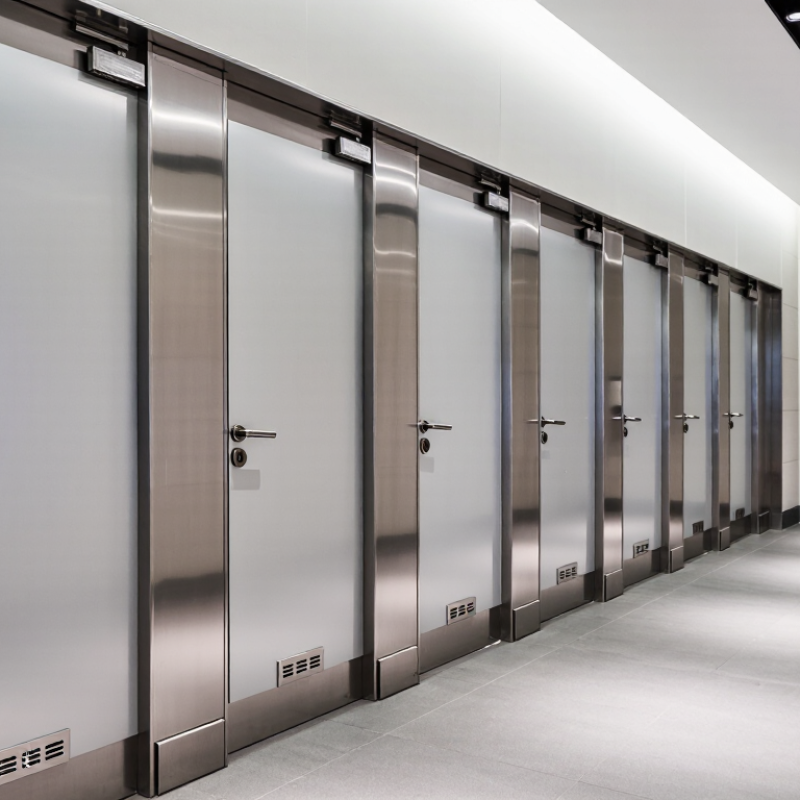
2026 Best Aluminium Washroom Door for Commercial Projects

What Defines an Aluminium Washroom Door for Commercial Projects?

An aluminium washroom door for a commercial project is more than a lightweight panel. It must withstand repeated opening, damp air, cleaning chemicals, and occasional impact while remaining easy to operate. Details matter. Look for a rigid frame, stable infill, and sealed edges; water often finds the weakest joint first. Anodized or suitably coated surfaces can resist corrosion, but performance depends on surface preparation and maintenance. Specify hinges and locks for expected traffic. Check clearances and door swing against the room layout and accessibility needs. Not every site needs the heaviest construction. Over-specifying can add cost and weight, while a thin, poorly braced leaf may sag.

Privacy is equally practical. Consider floor gaps, sightlines, indicator bolts, and emergency access before choosing a door and partition system. Measure finished openings on site rather than relying only on drawings; tile thickness and uneven walls can affect the fit. Ask for documented material and finish specifications, plus clear guidance for cleaning and hardware replacement. A sample is useful. Open it, close it, and inspect the edges. That test cannot predict years of service, but it may reveal loose fittings or a finish that feels too delicate.

How Its Frame, Core, and Hardware Are Constructed

A commercial aluminium washroom door starts with a frame that stays square under frequent use. Extruded aluminium profiles form the stiles and rails, with joined corners and reinforced areas around hinges and locks. Check the wall fixing points, too; a strong frame can still feel loose if its anchors miss solid backing. Small details matter.

The core affects weight, privacy, and resistance to daily knocks. Depending on the specification, it may use a honeycomb structure or a denser, moisture-resistant infill. The edges should be sealed, and the panel should sit evenly within the frame. Ask how cutouts and exposed edges are protected. Water can find weak spots, especially near the floor. No core is indestructible.

Hardware takes much of the repeated stress. Stainless-steel hinges, a suitable privacy indicator, and a replaceable latch are practical choices for busy facilities. Confirm that each component matches the door’s weight and intended traffic, rather than judging by appearance alone. Clearances also need checking: doors should swing freely without scraping tiles, while maintaining the intended privacy. One overlooked point is future adjustment. Hinges that can be tightened or aligned make routine maintenance simpler, though they cannot compensate for poor installation.

2026 Best Aluminium Washroom Door for Commercial Projects

Example Construction Dimensions: Frame, Core, and Hardware

This example specification uses a 1.5 mm aluminium frame wall, a 12 mm compact-laminate core panel, a 40 mm overall door leaf, and 2.5 mm stainless-steel hinge leaves. These measurements describe different parts of an example assembly, not a universal standard; confirm project requirements with the door supplier.

Which Performance Factors Matter in High-Traffic Facilities?

In high-traffic facilities, an aluminium washroom door faces repeated impacts, wet cleaning, and constant hand contact. The first test is structural stability: check frame rigidity, hinge reinforcement, and whether the door rubs after frequent use. A slight sag can turn a quiet door into a daily maintenance issue. Moisture resistance matters, too. Look for corrosion-resistant hardware and a finish that tolerates approved cleaners without becoming dull or patchy. Edges deserve attention; chipped coatings near the bottom often appear before broader wear. That is easy to overlook.

Hardware influences uptime. A closer should shut reliably without slamming, while hinges and locks should remain serviceable rather than requiring full-door replacement. For privacy, evaluate latch engagement and gaps from realistic standing positions, not only from a drawing. A few millimetres matter. Also assess ventilation, sound control, and clear opening space against the facility’s needs and applicable project requirements. During a mock-up, ask staff to open the door with wet hands and test cleaning access around hinges and floor clearance. Not every site needs the heaviest specification. Overbuilding adds cost; underestimating traffic creates repairs. I’d still expect some adjustment after installation, so accessible spare parts and clear maintenance instructions are practical performance features.

How to Specify the Right Door for a Commercial Washroom

A commercial washroom door should be specified for its daily workload, not just its appearance. Estimate how many people will use it during peak periods, then consider moisture, cleaning routines, and likely impact. Aluminium offers a practical balance of low weight and corrosion resistance, but the frame, finish, and fixings matter too. Small details matter.

Check the opening dimensions on site before ordering. Walls are not always square, and a few millimetres can affect the reveal, latch, and closing action. Specify suitable hinges, a durable lock, and hardware that staff can maintain without special tools. For busy facilities, test the door’s swing and clearance with nearby partitions, basins, and traffic routes. Confirm privacy needs and applicable local accessibility and building requirements with the project team.

Cleaning chemicals can dull an unsuitable finish over time, so ask for care instructions and finish performance data. Review the threshold and bottom clearance against the floor’s cleaning method and moisture exposure. A sample corner or mock-up can reveal sharp edges, colour differences, and awkward handle placement before installation. It may feel like extra work. It can prevent rework. No single door specification fits every site; document the expected use, maintenance plan, and any unresolved trade-offs before approving the schedule.

2026 Best Aluminium Washroom Door for Commercial Projects - How to Specify the Right Door for a Commercial Washroom

Specification Recommended Project Requirement How to Specify and Verify
Door configuration Select a hinged, sliding, or compartment door arrangement to suit the washroom layout, traffic flow, and available clearance. Confirm the opening direction, adjacent fixtures, circulation space, and maintenance access on the project drawings.
Clear opening Where U.S. ADA requirements apply, provide at least 32 in (815 mm) of clear width with the door open 90 degrees. Measure the usable clear opening, not the nominal door-leaf width. Verify local accessibility rules and required maneuvering clearances for the specific location.
Door leaf and frame Choose a commercial-grade aluminium-framed door with infill and dimensions suited to the selected door system and expected use. Specify the actual leaf thickness, frame profile, infill material, and maximum size from the system supplier’s tested or documented limits; these vary by design.
Corrosion resistance Use a finish and hardware suitable for frequent cleaning, humidity, and exposure to washroom moisture. State the required finish, colour, cleaning-chemical compatibility, and corrosion-resistance documentation. Consider corrosion-resistant fasteners and hardware in wet areas.
Privacy and emergency access Provide a privacy latch or indicator that can be released from the outside in an emergency. Confirm that the lockset is suitable for washroom use, clearly indicates occupancy where needed, and allows authorized emergency access.
Hardware and operation Specify durable hinges, closers where needed, and handles or pulls that are easy to operate and maintain. Check operating force, hardware reach, closing speed, and accessibility requirements against the codes applicable to the project. Coordinate closer selection with door size and use.
Threshold and floor interface Keep the threshold low and the transition suitable for the intended accessible route and floor finish. Where U.S. ADA requirements apply, thresholds on accessible routes are generally limited to 1/2 in (13 mm), with changes in level above 1/4 in (6 mm) requiring a bevel. Verify local rules and drainage details.
Impact protection Consider a kick plate or other replaceable protection where carts, cleaning equipment, or heavy foot traffic may damage the lower door area. Coordinate the plate material, height, edges, and fixing method with the door construction and cleaning routine.
Fire and life-safety requirements Use a fire-rated door assembly only where required by the building design or applicable regulations. When a rating is required, specify a tested and certified complete assembly, including frame, hardware, glazing or infill, and installation—not just a rated door leaf.
Cleaning and maintenance Choose smooth, accessible surfaces and hardware that can be cleaned without damaging the finish. Request written care instructions and confirm that replacement parts, adjustment procedures, and finish repairs can be supported over the expected service life.
Submittals and installation Require coordinated product data, shop drawings, finish samples, and installation instructions before fabrication. Review opening dimensions, wall construction, fixing points, door swing, clearances, hardware set, and site tolerances. Install and inspect in accordance with the approved system documentation.

How Installation and Maintenance Affect Long-Term Performance

A commercial aluminium washroom door can handle frequent use, but installation sets its starting point. The frame must be plumb and securely fixed to a sound wall. Even a small twist can cause uneven gaps, latch trouble, or scraping along the floor. Check the door swing against nearby partitions and fixtures before drilling. In damp rooms, use corrosion-resistant fixings and seal exposed joints where water could collect. Details matter.

Tips: Confirm clearances on site, not only on drawings. Open and close each door after fitting. Check that hinges, locks, and privacy indicators work smoothly.

Routine maintenance helps preserve performance. Wipe frames with a soft cloth and mild detergent, then dry them, especially around lower edges and hardware. Avoid abrasive pads that can mark the finish. Inspect hinges, fasteners, seals, and latches at regular intervals; tighten or replace worn parts before the door begins to sag. Record recurring faults, even if the notes seem minor. In practice, maintenance logs are often incomplete, and that makes small problems harder to trace. A dependable door still needs attention. An occasional careful check can prevent a noisy hinge or loose handle from becoming a daily inconvenience.

FAQS

What should a commercial aluminium washroom door withstand?

It should handle frequent opening, damp air, routine cleaning, and occasional knocks. Small details matter.

Which frame features help a door stay stable?

Look for rigid aluminium profiles, joined corners, and reinforcement near hinges and locks. Secure wall anchors matter too.

What kind of core is suitable?

Honeycomb or denser moisture-resistant infill may suit different needs. Check that exposed edges and cutouts are sealed.

How should I choose hinges and locks?

Match hardware to the door’s weight and expected traffic. Replaceable latches and adjustable hinges can simplify maintenance.

How can I check privacy before installation?

Review floor gaps, sightlines, indicator bolts, and emergency access. A sample helps, but it cannot predict years of wear.

Why measure the opening at the site?

Tile thickness and uneven walls can change the finished dimensions. A few millimetres may affect the latch or door swing.

What should I check about the finish?

Ask for finish specifications and cleaning instructions. Unsuitable chemicals may dull a surface over time.

Is a heavier door always better?

Not necessarily. Extra weight can add cost and strain hardware, while a thin, poorly braced door may sag. The right balance takes thought.

Conclusion

An Aluminium Washroom Door designed for commercial projects must balance durability, privacy, and ease of use in busy facilities. Its performance depends on how the frame, door core, and hardware work together: a rigid frame supports stable operation, a suitable core provides strength and privacy, and robust hinges, locks, and handles withstand frequent use. Surface finishes should also be easy to clean and suited to the expected moisture and traffic levels.

Choosing the right door involves assessing opening dimensions, usage frequency, accessibility needs, privacy requirements, and the surrounding environment. Careful installation helps ensure smooth movement, consistent clearances, and reliable hardware performance. Routine cleaning and timely checks of hinges, locks, and seals can reduce wear and extend service life. By considering specification, installation, and maintenance as a complete process, project teams can select a practical washroom door solution for long-term commercial use.

Clara

Clara

Clara is a professional marketing specialist who combines clear communication with a strong understanding of the company’s products. She regularly contributes expert articles to the company website, helping readers understand product features, practical applications, and the factors to consider......