Choosing among China’s aluminum door manufacturers requires more than comparing prices or polished catalogs. Buyers need to understand how each supplier handles design, production, quality checks, and delivery. A reliable Aluminum Door should fit its opening accurately, operate smoothly, and withstand the conditions it will face. Small details matter: frame thickness, corner joints, locking hardware, seals, and the finish around the edges. They are easy to miss in product photos.
There is no universal “best” manufacturer. A supplier suited to a large commercial project may not be the right fit for a home renovation or a custom order. This guide explains what to examine, including product range, manufacturing experience, customization options, communication, and after-sales support. Ask for recent project examples, detailed specifications, and test documents relevant to your intended use. Verify claims rather than relying on sales language alone. If possible, inspect samples or arrange an independent factory assessment. Even then, one question may remain: will the finished product match the sample after shipment and installation? A careful comparison cannot remove every risk, but it can reveal gaps before a purchase becomes difficult to change.
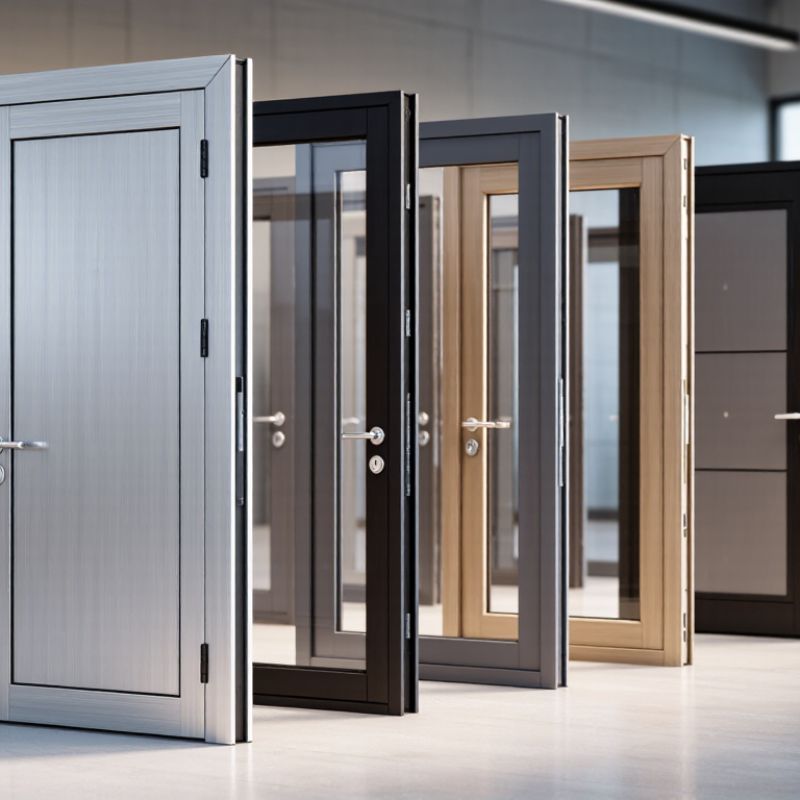
Evaluating aluminum door manufacturers in China starts with evidence, not polished catalog photos. Check whether the product follows GB/T 8478-2020, China’s standard for aluminum alloy doors and windows. Request recent, independently issued test reports for air leakage, water resistance, wind-pressure resistance, and thermal performance. Compare the tested model with the exact frame, glass, seals, and hardware in your quotation. Small substitutions matter.
Factory capability is visible in details: straight frame corners, consistent powder coating, clean drainage slots, and seals that meet evenly at the threshold. Ask how profiles are alloyed and finished, and how batches are inspected before packing. The International Aluminium Institute reports that recycling aluminum uses about 5% of the energy required for primary production. That figure supports asking for documented recycled-content claims, not accepting vague sustainability language. A test report can still miss poor installation planning. That deserves attention.
China’s aluminum door manufacturing industry combines large-scale extrusion with increasingly tailored fabrication.
Manufacturers turn aluminum billets into profiles, then assemble frames with thermal breaks, seals, glazing, and hardware. A well-made sample should feel rigid, close evenly, and show clean joints at the corners. Details matter. Surface finish also deserves close inspection: look for consistent color, smooth edges, and no visible coating defects. Production capacity alone does not prove dependable quality.
Factories differ in engineering depth, testing routines, and control over outsourced parts. Ask how they check profile dimensions, coating thickness, water resistance, and opening cycles; request test records that match the product being quoted.
Not always.
A polished brochure may tell you little about how a door performs after years of use.
That is useful to remember.
Site measurements, climate, building orientation, and installation skill all affect results. Some buyers focus heavily on price, then discover that unusual sizes, replacement hardware, or delayed samples complicate a project. Clear drawings and written specifications can prevent avoidable confusion. The industry is capable and fast-moving, but consistency still varies between workshops, and buyers should verify claims rather than assume every supplier follows the same process.
China’s aluminum door market includes manufacturers with different strengths, rather than one clear “best” type. Export-oriented factories often offer custom dimensions, varied finishes, and support for project orders. Their teams may provide shop drawings and packing plans for overseas shipments. Ask how they check frame squareness and glass fit. Small gaps can cause trouble during installation.
Some manufacturers focus on large residential projects. They may standardize frame profiles and hardware to keep production consistent across many units. Look for clear specifications on alloy, wall thickness, coating, and weather seals. A neat showroom helps, but it cannot prove long-term performance. Request product samples and inspection records.
Other factories specialize in design-led doors, such as slim-framed sliding systems or oversized openings. Their engineering support matters when openings are wide or exposed to strong wind. Confirm load limits, drainage details, and replacement-part availability before comparing prices. The profiles are not perfect categories; many suppliers overlap, and a polished catalogue can leave practical questions unanswered.
When comparing aluminum door manufacturers in China, look beyond polished catalogs. Ask for test reports tied to the exact door series, frame depth, glass build-up, and hardware. Check air leakage, water penetration, wind-load resistance, and thermal transmittance. A certificate is useful only when its scope, issuing body, factory site, and validity match the product being quoted. Details matter.
The GlobalABC and UNEP 2023 Global Status Report for Buildings and Construction estimated that buildings used 34% of global energy and produced 37% of energy- and process-related emissions in 2022. That wider context makes documented performance worth checking, not assuming. The U.S. Department of Energy’s Energy Saver guidance estimates that windows account for 25%–30% of home heating and cooling energy use. This figure concerns windows, not doors, but it underlines why buyers should request tested thermal values for the complete assembly.
Service quality shows up in practical details. Can the supplier provide installation drawings, spare-hardware availability, clear lead times, and written warranty terms? Ask how packaging protects corners and finishes during shipment. A factory audit or sample inspection can reveal workmanship that a brochure cannot. I would still treat a single test report cautiously: installation quality and site conditions can change real-world performance. Good paperwork helps, but it is not the whole story.
Choosing an aluminum door manufacturer starts with the specification, not the showroom photos. Ask for the alloy grade, frame depth, wall thickness, and thermal-break details. These affect strength, insulation, and how the door feels during daily use. A sample corner is useful: inspect the finish, seals, drainage slots, and joint alignment. Small flaws show.
Request test reports that match the intended door type and operating conditions. Check how the manufacturer controls dimensions, coating quality, and hardware installation across repeat orders. A smooth sample does not prove consistent production. Ask how defects are recorded and corrected, and whether replacement parts remain available. Clear answers matter.
Factory visits or a live video walkthrough can reveal practical details, such as storage conditions and packing methods. Ask for references from projects with similar sizes, climates, and use patterns. Confirm lead times, shipping protection, customization limits, and who handles installation questions. Compare quotations line by line; a low price may exclude upgraded glass or durable hardware. It can be easy to overlook those costs. Note any vague promises, too, and ask for written specifications before approving a sample.
Aluminum billets are extruded into profiles, then assembled with seals, glazing, hardware, and sometimes thermal breaks. Clean corner joints matter.
No. Some handle large residential projects, while others make slim-framed or oversized systems. These categories overlap, so labels alone tell little.
Check whether the frame feels rigid and closes evenly. Look at the coating, seals, drainage slots, and corner alignment. Small flaws show.
Ask for the alloy grade, frame depth, wall thickness, coating details, and thermal-break information. Clear written specifications help prevent confusion later.
Request test records for the quoted door type. Ask how dimensions, coating quality, and hardware installation are checked across repeat orders. Not always.
No. A polished sample cannot guarantee repeat production quality. I might trust it too quickly; inspection records offer another useful check.
Climate, building orientation, opening size, and installation skill all matter. For wide openings, confirm load limits, drainage details, and suitable hardware.
Compare glass, hardware, customization limits, lead times, and shipping protection line by line. A low price may exclude durable hardware.
Similar-project references can reveal whether a system suits your sizes and climate. Confirm replacement-part availability, too. Details matter.
This article explores how leading Aluminum Door manufacturers in China are assessed, from production capacity and material selection to design expertise, quality control, and customer support. It also introduces the structure of China’s aluminum door industry, where manufacturers serve a range of residential and commercial needs with different product styles, customization options, and delivery capabilities. Rather than relying on a single ranking, the article explains the qualities that can distinguish a reliable supplier.
Readers will learn how to compare product durability, finish, available certifications, warranties, and after-sales services. The article also outlines practical factors to consider before choosing a manufacturer, including project requirements, budget, communication, production timelines, and installation support. By weighing these criteria together, buyers can make a more informed decision and select a supplier whose products and services fit their expectations.