High-Performance Fenestration Systems
Factory-direct structural aluminum and aluminum-clad timber configurations verified for international commercial and luxury residential projects.
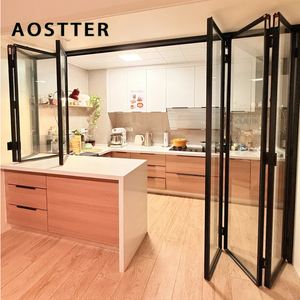
AOSTTER Golden Aluminum Profile Bifold Doors with Safety Panel
View Specifications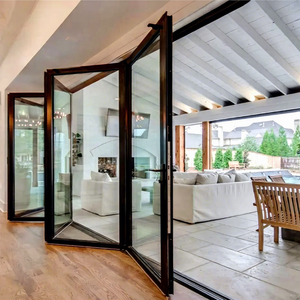
Modern Hurricane Impact Aluminum Exterior Bi-Folding Glass Doors
View Specifications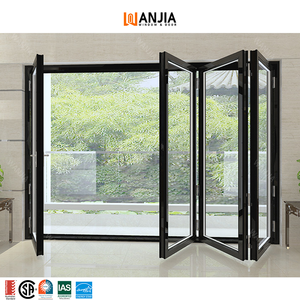
WANJIA NFRC Impact Resistant Laminated Glass Aluminum Doors
View Specifications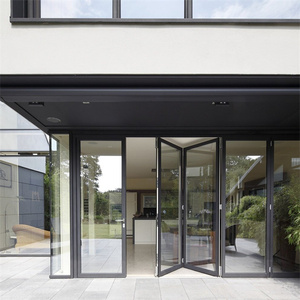
TOMA AS2047 Thermal Break Aluminum Fold Glass Patio Doors
View Specifications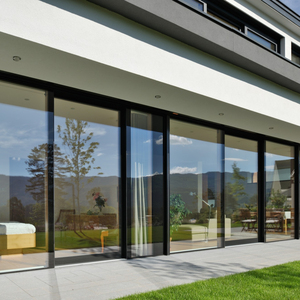
Florida Miami-Dade Approved Hurricane Proof Sliding Glass Doors
View Specifications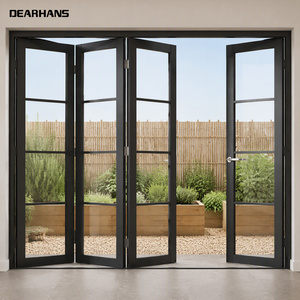
Seaside Villa Double Glazed Waterproof Aluminum Bifold Patio Doors
View Specifications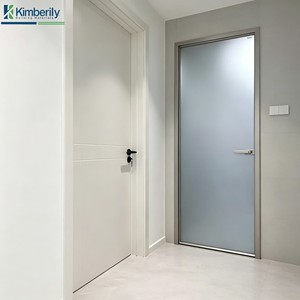
Minimalist Slim Frame Aluminum Fluted Glass Interior Swing Doors
View Specifications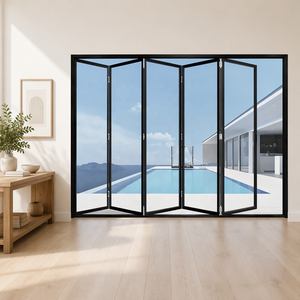
ZEYI Double Glass Exterior Concertina Accordion Folding Doors
View Specifications1. Structural Material Mechanics: The Aluminum-Clad Timber Paradigm
In modern sustainable architecture, envelope design requires balancing interior occupant comfort with exterior environmental resilience. CE Certified Aluminum Clad Wood Windows represent the apex of hybrid fenestration engineering. By combining the natural insulation properties, acoustic damping, and tactile elegance of interior solid timber with the weather resistance, structural rigidity, and zero-maintenance profile of exterior extruded aluminum, this system eliminates the physical compromises inherent to single-material frames.
The internal core utilizes laminated, multi-layer finger-jointed timber (typically European Pine, Siberian Larch, or FSC-certified Red Oak) dried in automated kilns to a precise moisture content of 12% ± 2%. This strict moisture control neutralizes internal hygroscopic stress, preventing warp, twist, or longitudinal bowing across extreme seasonal humidity cycles. Externally, an independent aluminum shell extruded from high-tensile EN AW-6063 T6 aluminum alloy acts as a dynamic shield against solar radiation, wind-driven rain, and mechanical impacts.
Crucially, the exterior aluminum cladding is not glued directly to the wood frame. Direct attachment would lead to structural failure due to differential thermal expansion—aluminum expands at approximately 23 × 10⁻⁶ /K, whereas wood exhibits minimal thermal expansion parallel to its grain. To overcome this, our engineering design integrates polyconnection snap-on composite clips (PA66-GF25 reinforced polyamide) that create a 5mm ventilated pressure-equalization air cavity between the wood and metal. This cavity dissipates condensation, permits uninhibited thermal expansion of the aluminum cladding, and preserves timber integrity over decades of service.
2. CE Certification & Harmonized European Standard (EN 14351-1)
For architects, facade consultants, and general contractors sourcing fenestration products internationally, CE marking is not merely a commercial mark; it is a legally binding assertion of compliance with the European Union Construction Products Regulation (CPR 305/2011). Our aluminum clad wood windows are rigorously tested and certified under the harmonized product standard EN 14351-1:2006+A2:2016 (Windows and doors - Product standard, performance characteristics).
Every production run leaves our Foshan manufacturing facility backed by an official Declaration of Performance (DoP), establishing full traceability and verified physical thresholds across the following critical performance indicators:
| Performance Characteristic | Harmonized Standard | Certified Rating / Threshold | Engineering Implication |
|---|---|---|---|
| Thermal Transmittance (Uw) | EN ISO 10077-1 / EN ISO 10077-2 | 0.79 – 1.1 W/(m²·K) | Suitable for Passive House and NZEB (Net-Zero Energy Building) envelopes. |
| Air Permeability | EN 12207 | Class 4 (600 Pa test pressure) | Prevents uncontrolled air infiltration, drastically lowering HVAC energy demand. |
| Watertightness | EN 12208 | Class E1050 (1050 Pa unshielded) | Zero water penetration under storm-force coastal weather conditions. |
| Resistance to Wind Load | EN 12210 | Class C5 / P3 = 3000 Pa | High-rise structural deflection stability (less than 1/300 sash displacement). |
| Acoustic Performance (Rw) | EN ISO 717-1 | 38 dB – 47 dB (with laminated IGUs) | Effective mitigation of low-frequency urban traffic and aviation noise. |
| Dangerous Substances | EN 14351-1 Clause 4.6 | VOC & Formaldehyde Free | Eco-friendly waterborne timber coatings safe for indoor air quality. |
Our Factory Production Control (FPC) system undergoes annual audits by accredited European Notified Bodies. This guarantees that batch-to-batch extrusion tolerances, corner joint shear strength, sealant elasticity, and glass spacer adhesion remain fully compliant with European technical standards.
3. Future B2B Procurement Trends for Commercial & High-End Projects
As building codes across the European Union (EPBD Directive revision), North America (ASHRAE 90.1), and Oceania advance toward carbon neutrality, the global procurement landscape for high-end windows is undergoing a fundamental structural transformation. B2B procurement managers and real estate developers must align their supply chains with three dominant technological shifts over the 2025–2030 cycle:
-
Decarbonization & Embodied Carbon Metrics (EPD Integration): Institutional buyers increasingly require third-party verified Environmental Product Declarations (EPDs). Sourcing low-carbon primary aluminum (processed via renewable hydroelectric power) alongside FSC-certified timber reduces the product's Cradle-to-Gate embodied carbon footprint by up to 42%.
-
Transition to Warm-Edge & TPS Warm Spacers: Traditional aluminum glass spacers create thermal bridges along the glass perimeter, leading to edge condensation and localized heat loss. Next-generation procurement specifications mandate Flexible Thermo-Plastic Spacers (TPS) or Glass-Fiber Reinforced Polyamide spacers with linear thermal transmittance (Ψ) ≤ 0.028 W/m·K.
-
Smart Building Integration & Concealed Mechatronic Hardware: Modern window schedules demand embedded magnetic position sensors, motorized multi-point locking mechanisms compatible with Building Management Systems (BMS), and automated natural ventilation triggers linked to indoor CO₂ and temperature monitors.
-
Extreme Weather Resilience (Multi-Hazard Engineering): Coastal development projects demand unified systems capable of weathering severe storms. Windows must simultaneously satisfy Miami-Dade severe impact testing (large missile impact resistant laminated glass) and extreme air-water insulation standards.
4. Product Technological Trends: Advanced Engineering Breakthroughs
To maintain competitive advantage, our manufacturing lines integrate state-of-the-art fenestration technologies designed to maximize operational lifespan and energy efficiency:
Fluorocarbon PVDF Coatings
Exterior aluminum finishes utilize 3-coat fluorocarbon PVDF resins (AkzoNobel or PPG) cured at 230°C. This surface treatment exceeds AAMA 2605 requirements, resisting salt spray corrosion, chalking, and UV degradation for over 30 years.
Triple-Seal EPDM Weatherstripping
Continuous automotive-grade EPDM gaskets combined with foam-filled center seal profiles form three impermeable barriers against wind and water penetration, preserving acoustic sealing even under intense wind pressures.
Precision Structural Bonding
Structural silicone bonding of the Insulated Glass Unit (IGU) directly to the wood frame increases sash torsional stiffness by 35%, enabling larger slim-frame glass lites without compromising sash sagging or alignment.
5. Enterprise Manufacturing Advantages & Global Supply Assurance
Headquartered in Foshan, Guangdong—the epicenter of global aluminum extrusion and fenestration technology—our manufacturing facility stands among China's premier high-end window and door engineering factories. Operating under an ISO 9001 certified quality management system, we bridge the gap between custom architectural craftsmanship and industrial scale.
German CNC Precision Machining
Profile processing utilizes 5-axis automated CNC machining centers, guaranteeing hole-drilling, hardware mortising, and corner mitering precision within ±0.1mm tolerance levels.
Tailored OEM / ODM Capabilities
We support full custom specifications for architects, contractors, and private label distributors—offering bespoke profile dies, custom wood stains, integrated insect screens, and specialized hardware finishes.
Rigorous Export Protection Packaging
Overseas shipping safety is guaranteed through fully enclosed, fumigated wooden crates lined with moisture barrier films, shock-absorbing corner guards, and rigid steel strapping.
6. B2B Procurement & Technical FAQ
Key answers to technical, regulatory, and logistics queries commonly raised by international architectural firms, facade engineers, and procurement managers:
How do I verify the authentic CE Certification and Declaration of Performance (DoP) for my project?
Every shipment includes a project-specific Declaration of Performance (DoP) document tied to our Notified Body test reports under EN 14351-1. The CE label is permanently affixed to the glass rebate or frame spacer of each unit, detailing essential performance ratings including Uw thermal transmittance, air permeability, watertightness, and structural wind resistance.
How does aluminum-clad wood prevent moisture rot or timber movement in high-humidity or tropical climates?
Timber components undergo automated vacuum pressure impregnation and multi-coat eco-friendly waterborne surface treatments (such as Sikkens or Remmers finish systems). This seals the wood against atmospheric moisture absorption. Furthermore, the exterior aluminum cladding prevents direct rain contact, while the ventilated rear cavity continuously removes ambient moisture, preventing condensation build-up against the wood core.
What glass make-ups are recommended for achieving Passive House thermal performance?
To achieve thermal transmittance values of Uw ≤ 0.8 W/(m²·K), we recommend triple-pane Insulated Glass Units (IGUs) consisting of: 4mm or 6mm Low-E tempered glass + 16mm Argon gas-filled gap (90% concentration) + 4mm clear tempered glass + 16mm Argon gas-filled gap + 4mm Low-E tempered glass, paired with Warm Edge TPS or polyamide spacers (e.g., Technoform).
What hardware brands are integrated, and can client-specified hardware be accommodated?
Our standard systems integrate premium European hardware platforms including Siegenia, Roto Frank, and HOPPE multi-point locking systems, providing high security (RC2 / RC3 anti-burglary compliance) and effortless operation. We also accommodate custom hardware mortising for client-supplied handles or smart electronic locking mechanisms upon request.
What is the typical production lead time and logistics process for bulk commercial orders?
Following final CAD shop drawing approval and sample sign-off, standard production lead time is 30–40 days. Our dedicated export team manages full logistics support, including export customs clearance, sea freight container consolidation (FCL/LCL), detailed packing lists with gross crate weights, and comprehensive installation manuals for on-site contractor teams.
Request Technical Engineering Support & Custom Quotation
Submit your architectural window schedules, CAD elevation drawings, or project performance requirements to our senior engineering team for rapid analysis and factory-direct pricing.