Flagship Architectural Windows & Doors
Explore our CE-marked, NFRC-certified, and AS2047-tested aluminum window and door configurations engineered for extreme structural loads and passive thermal efficiency.
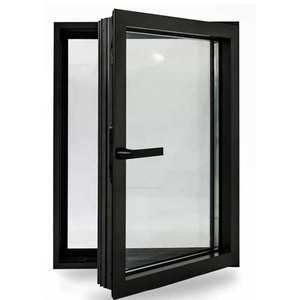
Superhouse Passive House Energy Rated Crank Awning Window
View Technical Details →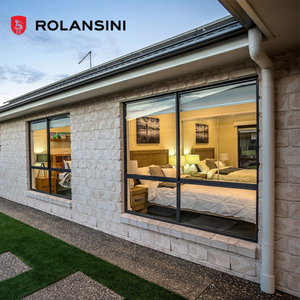
Heavy Duty Minimalist Panoramic Horizontal Sliding Window
View Technical Details →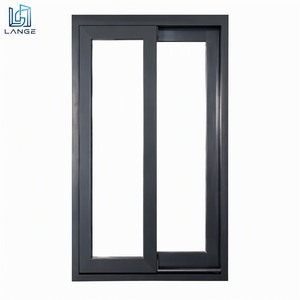
Residential Double Glass Aluminum Alloy Sliding Window
View Technical Details →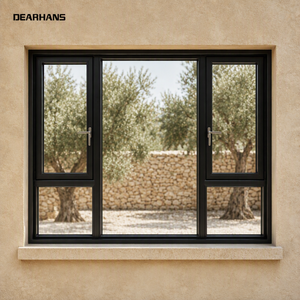
Thermal Break Aluminum Soundproof Insulation Casement Window
View Technical Details →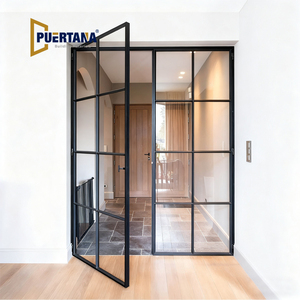
Modern Indoor Aluminum French Glass Door Wall Divider
View Technical Details →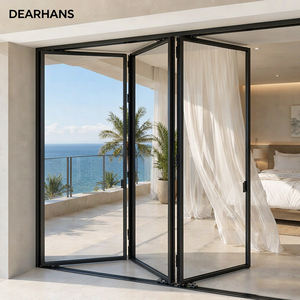
Aluminum Alloy Profiles Folding Glass Bi-Fold Patio Door
View Technical Details →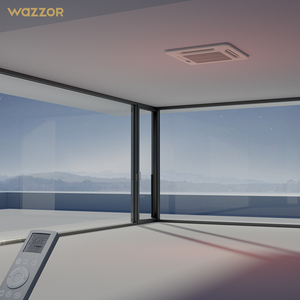
Wazzor Hurricane Proof Impact Low-E Casement Window
View Technical Details →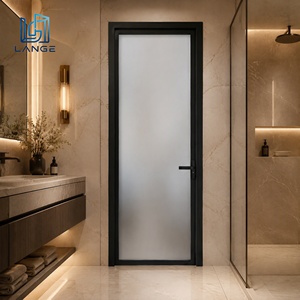
LANGE Modern Slim Frame Aluminum Interior Swing Door
View Technical Details →Foshan Manufacturing Infrastructure & Global E-E-A-T Capabilities
Operating from Foshan, Guangdong—China's global capital for precision aluminum extrusion—Kora Windows & Doors combines metallurgical science, digital CNC fabrication, and international quality governance.
CE Mark Compliance (EN 14351-1)
Every window assembly undergoes rigorous third-party testing in accordance with European Norm EN 14351-1, covering air permeability, watertightness, wind load resistance, and thermal transmittance values.
Precision Thermal Break Technology
Utilizing high-grade Polyamide PA66-GF25 structural thermal strips, our systems isolate interior and exterior aluminum profiles, eliminating thermal bridging and condensation risks in harsh climates.
B2B OEM / ODM Customization
From private-label aluminum extrusion profiles to bespoke architectural hardware, warm-edge glazing make-ups, and project-specific CAD shop drawings, we cater directly to developers and importers.
Technical White Paper: Structural Metallurgical Standards & CE Certification Demystified
In modern architectural engineering, fenestration is no longer merely a passive aesthetic boundary; it is a complex kinetic structure responsible for energy conservation, acoustic insulation, structural safety, and life-cycle durability. Selecting a certified manufacturer requires an in-depth understanding of material science, structural mechanical testing, and international code compliance.
1. Primary Alloy Selection & Profile Extrusion Dynamics
All structural framing manufactured by Kora utilizes prime virgin 6063-T5 and 6063-T6 architectural grade aluminum alloys. Unlike secondary recycled scrap billet that contains high levels of copper and iron impurities causing micro-cracking under stress, prime 6063-T5 exhibits optimized tensile strength (≥ 160 MPa) and yield strength (≥ 110 MPa).
Our extrusions maintain a minimum profile wall thickness of 1.4mm to 2.0mm for residential windows, and up to 3.0mm for heavy-duty commercial curtain walls and sliding patio doors, ensuring structural integrity against wind deflection under high-rise pressure scenarios (up to 5000 Pa design pressure).
2. Surface Finishing Science: Anodizing, PVDF, & Powder Coating
To resist coastal salt-spray corrosion, UV-induced chalking, and industrial chemical exposure, profile surfaces are treated with advanced surface engineering techniques:
- Qualicoat-Certified Powder Coating: Applied via electrostatic deposition to a thickness of 60–80 microns, providing impact resistance and color retention across 200+ RAL shades.
- Fluorocarbon (PVDF) Spraying: A 3-coat/2-bake system with 70% Kynar 500 resin, engineered to withstand intense solar radiation and tropical atmospheres without fading over a 25-year lifespan.
- Anodizing Grade 15/25: ElectTableCell electrolytic oxidation creating an integral aluminum oxide layer up to 25 microns thick, yielding superior metallic textures and surface hardness.
Performance Metrics Framework (CE & International Benchmarks)
| Performance Criterion | Test Standard | Achieved Classification / Value | Engineering Impact |
|---|---|---|---|
| Air Permeability | EN 12207 / ASTM E283 | Class 4 (q100 ≤ 3 m³/h·m²) | Prevents energy leakage and forced air infiltration in high-pressure environments. |
| Watertightness | EN 12208 / ASTM E331 | Class E1050 (Static water pressure up to 1050 Pa) | Eliminates rainwater penetration during torrential storms and hurricane conditions. |
| Wind Load Resistance | EN 12210 / ASTM E330 | Class C5 (Deflection < 1/300 at 2000 Pa) | Guarantees structural safety for high-rise building facades and coastal structures. |
| Thermal Transmittance (U-Value) | EN ISO 10077-2 / NFRC 100 | Uw ≤ 1.1 - 1.6 W/m²·K (Series dependent) | Significantly reduces HVAC heating/cooling energy loads for Passive House compliance. |
| Acoustic Attenuation | EN ISO 140-3 / ASTM E90 | STC 38 dB – 45 dB (with Laminated IGU) | Isolates urban traffic, aircraft, and high-frequency background noise. |
Strategic Sourcing & Future Industry Development Trends (2025–2030)
As global building energy codes tighten toward net-zero targets (such as the EU Energy Performance of Buildings Directive and US Title 24), the global fenestration supply chain is undergoing a fundamental structural transition. Overseas buyers, developers, and trade importers must realign their procurement strategies to capture competitive advantages over the next decade.
Trend 1: Passive House Mandates & Low-U Glass Assemblies
Standard double-glazed thermal break windows are rapidly giving way to ultra-low U-value assemblies. Future-proof procurement demands triple-pane Insulated Glass Units (IGU) equipped with dual Low-Emissivity (Low-E) soft coatings, 95% Argon gas infill, and structural warm-edge composite spacers (such as Technoform or Swisspacer). These technologies drive overall window U-factors down below 0.8 W/m²K, making passive solar architectural designs viable in northern European and North American zones.
Trend 2: Ultra-Slim Sightlines & Concealed Hardware Engineering
Architectural design aesthetics continue to favor expansive glass areas with minimal frame visibility. The industry is moving toward minimalist horizontal sliding and multi-slide panoramic systems where frame profiles are embedded into finished walls, floors, and ceilings. This transition relies on heavy-duty stainless steel concealed carriage rollers capable of supporting individual sash loads up to 400 kg while maintaining single-finger glide operation.
Trend 3: Smart Building Integration & Motorized Actuators
Windows and doors are becoming active nodes within Building Management Systems (BMS). High-end commercial and residential projects now specify concealed electric chain actuators, motorized multi-point locking locks, and smart sensor arrays (measuring rain, wind velocity, and interior CO2 levels). Factory pre-wiring and modular integration during profile machining are essential capabilities for export suppliers.
Trend 4: Circular Material Sourcing & Low-Carbon Billets
Environmental, Social, and Governance (ESG) criteria are driving carbon-footprint accounting throughout construction materials. Leading developers now audit suppliers for Scope 1, 2, and 3 emissions. Sourcing aluminum extruded with hydro-electric power or incorporating certified post-consumer scrap reduces the embodied carbon of aluminum window profiles by up to 70% compared to coal-smelted alternatives.
Frequently Asked Procurement Questions
Essential insights for overseas importers, contractors, and project developers when sourcing CE-certified aluminum windows directly from China.
What specific documentation is provided to verify CE compliance for European imports?
We supply the full Declaration of Performance (DoP) under EN 14351-1, along with official initial type-testing (ITT) laboratory reports covering air-water-wind performance, factory production control (FPC) certificates under ISO 9001, and glass supplier compliance certificates for CE-marked toughened and laminated safety glass (EN 12150 & EN 14449).
Can Kora manufacture fully custom extrusion profiles based on architect drawings?
Yes. We offer complete OEM/ODM engineering services. Our tooling facility can extrude custom aluminum profile geometries, develop proprietary gasket channels, and manufacture customized die molds within 15 to 20 days. Detailed CAD shop drawings and 3D cross-section samples are submitted for approval prior to mass production.
How do you ensure zero-damage packaging for long-distance ocean freight?
All products undergo a 5-layer protective export packaging sequence: 1) Protective low-tack film on profile surfaces, 2) EPE foam corner protectors, 3) Bubble wrap inner containment, 4) Heavy-duty corrugated cardboard boxing, and 5) Fully enclosed, fumigation-free plywood crates with internal steel strapping and air-cushion dunnage for container consolidation.
What lead times should be budgeted for custom B2B project orders?
Standard custom production lead times are typically 25 to 35 calendar days following shop drawing sign-off and deposit receipt. For bulk project orders requiring custom profile die creation, allow an additional 15 days for die trial and sample extrusion testing.
How are warranty claims handled for international project installations?
We back our fenestration products with a 10-year comprehensive structural frame warranty, a 5-year glass IGU seal warranty, and a 5-year hardware replacement warranty. In the rare event of a component defect, replacement hardware or glazing seals are dispatched express via air freight, supported by remote engineering guidance.