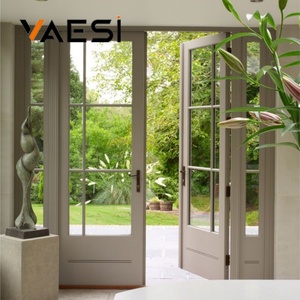
Architectural Aluminium Doors & Frame Systems Showcase
Explore our export-grade aluminium profile doors, soundproof glazed partitions, and custom millwork framework tested for international residential and commercial developments.
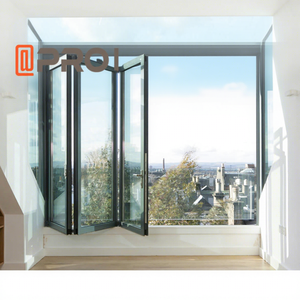
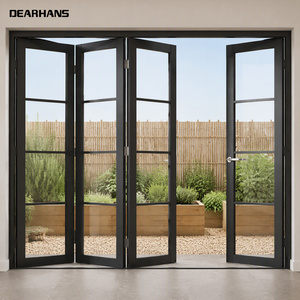
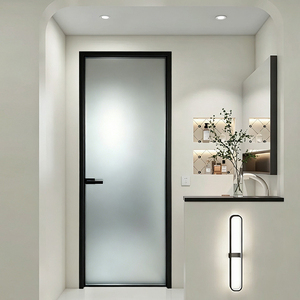
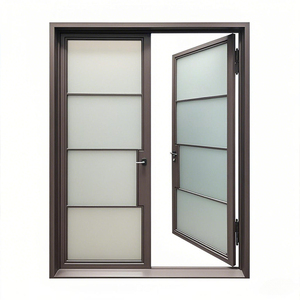
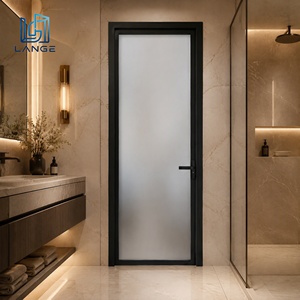
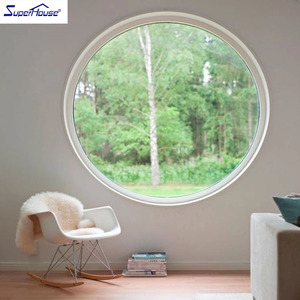
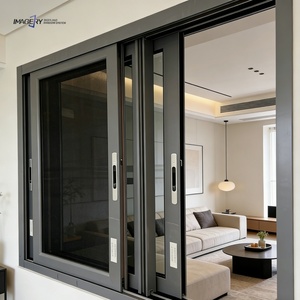
Foshan Manufacturing Excellence & Supply Chain Capacity
Operating out of Shishan Town, Nanhai District, Foshan—China's global epicenter for aluminium extrusion—we combine industrial scale with precision engineering to serve international architects, furniture manufacturers, and procurement agencies.
10+
Years Manufacturing Expertise
100k+
Global Units Exported
ISO9001
Certified Quality System
NFRC / CE
Compliance Tested Systems
Extrusion & Alloy Integrity
We utilize prime 6063-T5 and 6061-T6 architectural aluminium billets. Our strict control over alloy purity ensures tensile strengths exceeding 185 MPa, preventing warping in high-moisture kitchen environments.
Advanced Surface Finishes
From 15-25 micron anodizing (matte black, champagne gold, brushed titanium) to AkzoNobel fluorocarbon powder coatings, our treatments withstand rigorous ISO 9227 neutral salt spray tests for over 1,000 hours.
Precision OEM/ODM Tooling
Equipped with multi-axis CNC machining centers, automatic corner-crimping lines, and custom die extrusion infrastructure, we turn CAD/BIM drawings into bulk production within ultra-tight geometric tolerances.
Engineering Whitepaper: Material Benchmarks for Aluminium Kitchen Cabinet Doors
A technical guide for B2B buyers, cabinet makers, and commercial real estate developers evaluating aluminium vs traditional wooden cabinetry doors.
In modern high-end architectural millwork and residential cabinetry, aluminium kitchen cupboard doors have rapidly replaced conventional MDF, particleboard, and solid wood substrates. The primary drivers behind this global shift are superior dimensional stability under thermal fluctuation, absolute water impermeability, zero formaldehyde off-gassing (E0 standard compliance), and compatibility with minimal architectural glass infills.
1. Metallurgy & Profile Structural Mechanics
The structural performance of aluminium cabinet frames is directly linked to profile geometry and thermal treatment. Factory-direct manufacturing in Foshan leverages 6063-T5 aluminium alloy as the standard for slim-frame glass cabinet doors. When subjected to artificial aging (T5 temper), this material yields an optimal balance of hardness (8-12 Webster hardness) and surface smoothness required for high-grade anodizing.
| Material / Parameter | 6063-T5 Aluminium Frame | Hydraulic Moisture-Proof MDF | Solid Hardwood (Oak/Maple) |
|---|---|---|---|
| Moisture Absorption Rate | 0.00% (Impervious) | 8.0% - 15.0% (Risk of Swelling) | 6.0% - 12.0% (Expands/Shrinks) |
| Formaldehyde Emission | 0.00 mg/L (Zero VOCs) | 0.05 - 0.124 mg/m³ (E1/E0 Limit) | Natural VOCs depending on varnish |
| Tensile Yield Strength | ≥ 160 MPa | 2.5 - 4.0 MPa (Internal Bond) | 40 - 80 MPa (Parallel to grain) |
| Fire Safety Rating | Class A1 Non-Combustible | Class B2 / C Combustible | Class C Combustible |
| Service Life Expectancy | 25+ Years (Recyclable) | 5 - 8 Years | 10 - 15 Years (Requires upkeep) |
2. Hardware Integration & Corner Joinery Systems
High-volume procurement mandates seamless integration with world-class hardware systems such as Blum, Salice, and DTC concealed hinges. Modern aluminium kitchen cabinet doors incorporate three dominant joint methodologies:
- Concealed Steel Corner Cleats with Set Screws: Allows flat-pack knockdown (CKD) shipping to destination ports, reducing freight volume by up to 65%.
- Hydraulic Corner Crimping with 2-Part Epoxy Injection: Delivers monolithic frame rigidity for floor-to-ceiling (up to 3000mm) glass cabinet doors.
- Integrated Handle Profile Extrusions: Eliminates post-drilling and external handle hardware by extruding finger-pull channels directly into the door stile profile.
Global Procurement & Development Trends in Aluminium Millwork
Key market vectors shaping how importers, wholesale distributors, and real estate developers source aluminium kitchen cupboard doors from Chinese manufacturers over the next decade.
1. Minimalist Ultra-Slim Sightlines
Architectural demand is rapidly shifting away from bulky 45mm frame profiles toward ultra-narrow stiles measuring between 10mm to 18mm visible face width. These micro-frame extrusions showcase wide spans of clear, fluted (Moru), or tinted tempered glass, transforming traditional kitchen cabinets into transparent luxury display showcases.
2. Integrated Smart LED Recessed Channels
Next-generation cabinet profiles feature integrated, extruded heat-sink channels engineered specifically for low-voltage LED strip lights. The door frame acts simultaneously as a structural support, a diffusor lens carrier, and a thermal heat sink, enabling ambient interior cabinet illumination without visible wiring.
3. Circular Economy & Recycled Billets
European and North American regulatory frameworks (such as CBAM and LEED v4.1 certification) are incentivizing the specification of low-carbon aluminium. Foshan factories are increasingly utilizing up to 75% post-industrial recycled aluminium extrusions powered by hydroelectric smelting processes.
Manufacturing Technology & Surface Treatment Innovation
How state-of-the-art Chinese export factories ensure surface durability, color uniformity, and mechanical precision for enterprise order fulfillment.
Producing architectural-grade aluminium cabinet doors requires absolute precision at every phase of the manufacturing process. Minor variations in extrusion wall thickness or anodizing bath temperatures can cause batch color discrepancies and structural misalignments during installation.
Surface Finishes: Anodizing vs. Powder Coating vs. PVD
Selecting the optimal surface finish depends on the destination market's environmental conditions and aesthetic targets:
- Anodizing (Electrolytic Oxidation): Converts the aluminium surface into a durable, corrosion-resistant anodic oxide layer. Anodized finishes cannot peel or flake because the protective coating is an integral part of the metal. Key aesthetic offerings include Sandblasted Matt Black, Anodized Champagne, and Brushed Dark Bronze.
- Fluorocarbon Powder Coating (PVDF): Utilizes resin technology (e.g., AkzoNobel or PPG coatings) electrostatically applied and baked at high temperatures. Recommended for outdoor kitchens or coastal developments exposed to high salt-laden sea air.
- Physical Vapor Deposition (PVD) Hybrid Coatings: Combines anodization with thin-film ceramic deposition to yield luxury metallic luster (rose gold, mirror chrome, brass) with extreme scratch resistance exceeding 9H pencil hardness.
Safety Glass Tempering & Lamination Standards
All glass-infill kitchen cabinet doors manufactured for export comply with international architectural glass safety protocols:
- Toughened Safety Glass (EN 12150-1 / ANSI Z97.1): Heat-treated glass that crumbles into small, harmless granular chunks under extreme impact rather than jagged shards.
- Low-Iron Extra Clear Glass: Eliminates the natural green tint of standard float glass, providing 91%+ visible light transmittance for true color rendering of cabinet interiors.
- Laminated Deco Glass: Incorporates EVA/PVB interlayer films sandwiching wire mesh, fabric, or frosted acoustic films for elevated visual privacy and safety.
Frequently Asked Questions for B2B Importers & Buyers
Addressing essential technical, operational, and commercial queries regarding aluminium kitchen cabinet door procurement from China.
What is the typical Minimum Order Quantity (MOQ) for custom profile extrusion orders?
For stock profile shapes and standard finishes (e.g., Anodized Matt Black or Brushed Silver), our minimum order quantity starts at 50 square meters or 100 assembled door units. For fully customized aluminium extrusion dies tailored to your proprietary design, die development fees apply, with a profile MOQ of 500 kg per section shape.
How do you ensure frame dimension accuracy across large multi-unit project orders?
Every batch undergoes double-end precision miter cutting governed by CNC computerized length stops with tolerances within ±0.3mm. Before packing, sample frames from each production run are test-assembled on optical alignment tables to verify 90-degree squareness and diagonal consistency.
Can your aluminium door frames accommodate standard soft-close concealed hinges?
Yes. Our profile designs feature dedicated screw-retention channels and pre-milled hinge pocket options compatible with international hinge brands including Blum 7000 series, Salice Air ultra-compact hinges, DTC, and Hafele concealed hardware systems.
What export packaging methods are used to prevent scratching during sea freight?
Each individual door profile or assembled frame is wrapped in a protective 50-micron anti-scratch polyethylene film, edge-protected with corner guards, layered with foam sheet separators, and packed into custom heat-treated wooden crates (fumigation-free plywood crates) suitable for containerized FCL or LCL shipments.
How does an aluminium kitchen cupboard door factory assist with BIM and CAD specifications?
Our in-house engineering team provides complete 2D profile shop drawings (DWG/DXF format) and 3D parametric BIM models (Revit format) for architects and procurement directors to incorporate directly into project tender documents.
What is the typical lead time from deposit payment to port dispatch in Foshan?
Standard production lead times range from 15 to 25 business days following final shop drawing approval and deposit confirmation. Custom extrusion die creation adds approximately 7 to 10 days for tooling development and initial sample sign-off.
Do you offer Knock-Down (CKD) flat-pack shipping options?
Yes. We offer fully flat-packed Complete Knock-Down (CKD) kits containing pre-cut and pre-milled aluminium stiles, corner brackets, rubber gasket seals, and assembly hardware. Flat-packing drastically minimizes shipping volume, allowing importers to optimize container space and reduce ocean freight costs.
Partner with China's Premier Aluminium Cabinet Door Manufacturer
Send your CAD drawings, door schedules, or OEM private-label requirements directly to our Foshan engineering team for immediate pricing and technical evaluation.