Engineering Blueprint: Sourcing High-Performance Aluminum Stacking Doors from China
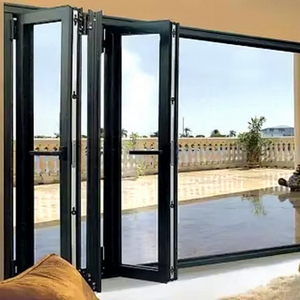
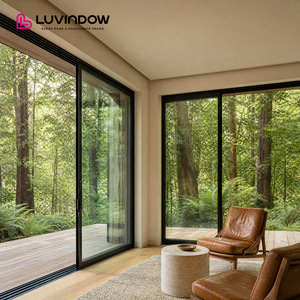
In modern luxury residential and commercial architecture, the boundary between interior living spaces and surrounding natural landscapes has increasingly dissolved. Aluminum stacking doors (also known as multi-slide or telescoping patio door systems) have emerged as the primary architectural element enabling seamless indoor-outdoor transitions across expansive structural spans. Unlike standard bi-fold doors that project outward or inward when stacked, sliding-stacking doors slide smoothly along parallel multi-track extrusions, neatly nesting sashes behind fixed panels or into wall pockets.
As the world’s leading hub for architectural fenestration manufacturing, Foshan, Guangdong Province, China houses the industry's most sophisticated aluminum extrusion, powder coating, CNC machining, and glass fabrication ecosystem. However, for international procurement directors, facade consultants, and general contractors, selecting the best aluminum stacking door factory requires evaluating deep engineering metrics beyond initial aesthetic appeal. This whitepaper establishes a comprehensive technical framework for evaluating structural loading, thermal barrier geometry, water tightness, acoustic isolation, and long-term hardware durability.
Structural Profile Science & Metallurgy: 6063-T6 vs. 6005A-T6 Alloy Selection
The structural integrity of a large-span multi-track stacking door system depends heavily on profile cross-sectional geometry and alloy temper. High-end China factories like Kora Aluminum Windows & Doors standardly utilize primary billet 6063-T6 or 6005A-T6 structural aluminum extrusions with nominal wall thicknesses ranging from 2.0mm to 3.0mm in load-bearing sashes—far exceeding standard residential window profiles (1.4mm).
| Metallurgical & Mechanical Property |
Architectural Grade 6063-T6 |
Structural Heavy-Duty 6005A-T6 |
Engineering Impact on Stacking Doors |
| Ultimate Tensile Strength (MPa) |
≥ 205 MPa |
≥ 260 MPa |
Prevents frame bowing under high wind loads up to 4500 Pa. |
| Yield Strength (0.2% Offset) |
≥ 170 MPa |
≥ 215 MPa |
Maintains structural elastic memory during seismic drift. |
| Webster Hardness (HW) |
≥ 12 HW |
≥ 14 HW |
Resists surface denting and roller track indentation under heavy sashes. |
| Anodizing & PVDF Surface Quality |
Exceptional finish smoothness |
High strength, satin texture |
Qualicoat Class 2/3 performance against C5-M marine corrosion. |
Thermal Barrier Architecture & Glass Science Innovations
Achieving ultra-low overall system U-factors (Uw ≤ 1.1 W/m²K) in multi-track stacking door configurations presents a complex thermodynamic challenge. Because stacking doors require 2-track, 3-track, or 4-track outer frames, the thermal bridge surface area is substantially larger than that of standard casement windows.
PA66 GF25 Polyamide Thermal Strips
Conventional PVC thermal breaks degrade under UV exposure and thermal expansion. Leading China factories utilize 24mm to 34mm Technoform-grade Polyamide (PA66 reinforced with 25% glass fiber), matching aluminum’s linear expansion coefficient to eliminate shearing during temperature swings from -30°C to +80°C.
Warm-Edge Spacer & Argon Gas Filling
To eliminate perimeter condensation, sashes incorporate composite warm-edge spacer bars (TGI / Technoform) combined with 90%+ pure Argon gas filling within double/triple IGUs. Low-E coatings (such as double-silver or triple-silver Low-E) reflect far-infrared heat while maintaining high visible light transmittance (VLT).
Quadruple EPDM Gaskets & Continuous Drainage
Air tightness and water penetration resistance are enforced using vulcanized EPDM rubber gaskets combined with finned weather-stripping. Outer sill tracks feature stepped pressure-equalized drainage cavities with one-way stainless steel check valves that prevent water backflow during 100+ km/h tropical rainstorms.
B2B Vendor Selection Framework: Evaluating China OEM Factories
When evaluating suppliers for large-scale multi-family, hotel, or high-end residential projects, procurement officers must differentiate between raw trading intermediaries and fully integrated manufacturers. Below is an engineering evaluation matrix comparing Tier-1 Foshan OEM Manufacturers against Low-End Assemblers and Boutique European Brands:
| Performance / Capability Metric |
Tier-1 Foshan OEM (e.g., Kora) |
Low-End Local Assemblers |
Boutique European Brands |
| Profile Alloy & Wall Thickness |
Primary 6063-T6 / 2.0mm–3.0mm wall |
Recycled aluminum / 1.2mm–1.4mm wall |
Primary 6063-T6 / 2.0mm–2.5mm wall |
| Hardware Systems & Rollers |
German Siegenia/Hoppe or SUS316 Heavy Rollers |
Unbranded zinc alloy light rollers |
Proprietary European hardware |
| Thermal Insulation (U-Factor) |
Uw 1.2 – 1.6 W/m²K (NFRC Tested) |
Uw > 3.2 W/m²K (Non-thermal break) |
Uw 1.0 – 1.4 W/m²K (Certified) |
| Direct Factory Sourcing Cost |
Optimal (Direct Factory Price) |
Very Low (High risk of failure) |
Extremely High (3x–5x markup) |
| Customization & Private Labeling |
Full OEM/ODM, Custom Dies & Packaging |
Fixed catalog sizes only |
Restricted modifications |
| Factory Audit & VR Capabilities |
360° VR Tour + ISO 9001 Audited |
No verifiable quality systems |
High documentation, limited VR |
Accelerate Your Project Sourcing with Direct Factory Pricing
Whether you require engineered aluminum stacking doors, hurricane-impact sliding systems, or custom whole-home architectural fenestration, our engineering team is ready to analyze your architectural drawings and provide a turnkey technical quote.
Get a Quote