Featured High-Performance Aluminium Window & Door Systems
Direct OEM/ODM Factory Supply with Global Code Compliance (NFRC, AS 2047, CE, Title 24)
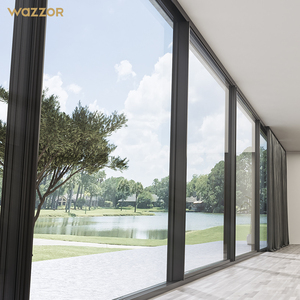
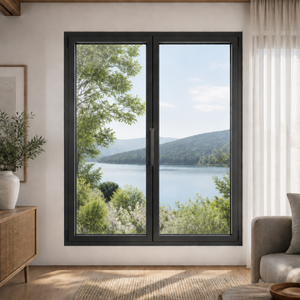
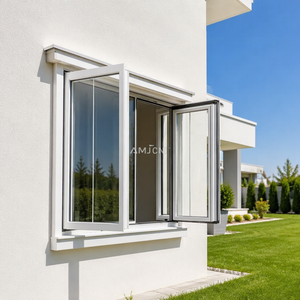
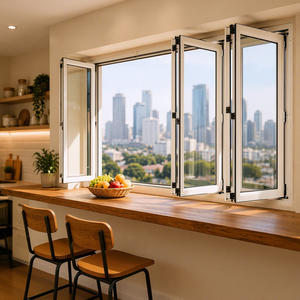
1. Executive Market Intelligence: Decoding China's Fenestration Manufacturing Dominance
The global architectural fenestration sector has undergone a structural transformation over the past decade. China currently accounts for approximately 65% of global architectural aluminium extrusion and window assembly output. Centered primarily in major industrial clusters such as Foshan (Guangdong Province) and Weifang (Shandong Province), Chinese factories offer an unprecedented vertical integration model—spanning raw bauxite processing, billet casting, precision extrusion die design, automated powder/PVDF coating, and thermal break assembly.
For international real estate developers, commercial contractors, trade distributors, and architectural firms, evaluating China top aluminium windows prices factories & factory sourcing models requires moving past superficial unit cost quotes. Genuine sourcing advantage is achieved by understanding the underlying engineering economics: raw material price indexing (tied to Shanghai Futures Exchange A00 ingot spot rates and London Metal Exchange cash quotes), thermal performance metrics (overall U-factor, Solar Heat Gain Coefficient SHGC), frame extrusion structural thickness, hardware mechanical endurance, and international compliance testing.
Foshan fenestration ecosystems aggregate raw alloy suppliers, glass processors (Xinyi, CSG, Fuyao), surface finish mills, and hardware foundries within a 30km radius, reducing logistics friction to near zero.
Leading exporters manufacture systematically to meet North American NFRC/AAMA/ASTM, Australian AS 2047/AS 1288, and European CE EN 14351-1 standards with verifiable test lab documentation.
Direct OEM factory procurement eliminates multiple layers of local distributor markups, allowing buyers to specify triple-glazed, thermal-break systems at standard local window budgets.
2. In-Depth Price Analysis: Cost Drivers & Factory Pricing Matrix ($/m²)
Navigating factory quotes requires transparency regarding how fenestration systems are priced. In Chinese export factories, prices are typically quoted per square meter ($/m²) or per complete opening set FOB (Free on Board) China port. The structural cost breakdown of an architectural aluminium window assembly comprises four main components:
- Aluminium Extrusion Profiles (40% - 45%): Dependent on alloy grade (6063-T5 vs. 6063-T6), frame depth (60mm to 140mm), profile wall thickness (1.4mm to 3.0mm), and polyamide thermal strip width (PA66GF25).
- Insulated Glazing Unit - IGU (25% - 30%): Governed by glass layers (double or triple glazed), low-emissivity (Low-E) coatings, argon gas filling, warm-edge spacers, and safety toughening or SGP hurricane impact laminates.
- Architectural Hardware & Gaskets (15% - 20%): Determined by multi-point lock mechanisms, concealed hinges, stainless steel rollers, and continuous EPDM weather-stripping (imported European vs. top-tier domestic brands like Hopo, Kinlong, Sobinco, or Siegenia).
- Surface Finish & Factory Assembly (10% - 15%): Standard powder coating vs. high-durability Fluorocarbon (PVDF) spray or wood-grain transfer, combined with CNC machining, 45-degree miter corner crimping, and silicone injection.
| System Classification | Profile Wall & Structure | Glazing Specification | Target Application | FOB China Price Range ($/m²) |
|---|---|---|---|---|
| Non-Thermal Break Standard Sliding/Casement | 1.4mm - 1.6mm 6063-T5 Profile, Powder Coated | 5mm + 12A + 5mm Double Toughened Clear Glass | Low-rise residential, mild climate zones, budget projects | $45 – $75 / m² |
| Mid-Tier Thermal Break Residential System | 1.4mm - 1.8mm Profile with 20mm-24mm PA66 Thermal Strip | 5mm + 12Ar + 5mm Low-E Double Glazed, Argon Filled | Standard residential villas, multi-family apartments, replacement windows | $85 – $140 / m² |
| High-Performance NFRC/AS2047 Impact System | 2.0mm - 2.5mm Heavy-Duty Extrusion, Reinforced Miter Joints | 6mm Low-E + 12Ar + 6mm Toughened or Laminated Hurricane Glass | North American / Australian code compliance, coastal high-wind zones | $150 – $260 / m² |
| Architectural Minimalist / Frameless Slim System | Ultra-slim 16mm-25mm visible sightline, concealed frame profile | 8mm + 16Ar + 8mm Super-Clear Triple Low-E / SGP Laminated | Luxury custom architectural homes, high-end commercial facades | $220 – $420 / m² |
3. Factory Vetting Framework: Distinguishing Factory Types & Ensuring E-E-A-T Quality
When searching for a China aluminium windows factory, buyers encounter three distinct vendor profiles on trade platforms. Understanding these supplier archetypes is essential for operational risk management:
Large-scale industrial mills focusing purely on extruding raw aluminum billets and selling long profile bars. They rarely handle finished window assembly or customized architectural hardware fitting.
Sales companies without production facilities. While offering English language support, they add 15%-30% margin friction and often lack direct quality control over shop floor corner-glue injection.
The optimal sourcing partner (such as Kora Windows & Doors): specialized engineering factories equipped with CNC machining centers, dedicated glass assembling lines, and internal testing rigs.
To verify factory authoritative competence (E-E-A-T), commercial buyers should mandate proof of the following factory assembly processes prior to issuing downpayments:
Ensure the factory utilizes heavy pneumatic corner crimping machines coupled with two-component corner joint adhesive (corner glue injection) rather than basic mechanical screws. Glue injection guarantees 30-year watertightness and prevents frame warping during severe thermal expansion.
Verify that frame and sash gaskets use continuous, co-extruded EPDM (Ethylene Propylene Diene Monomer) rubber seals with continuous vulcanized continuous corner pieces, avoiding cheap PVC gaskets that shrink and crack under UV exposure within 24 months.
4. Enterprise Advantage: Why Kora Windows & Doors Leads Foshan Manufacturing
As an established fenestration manufacturer rooted in Shishan Town, Nanhai District, Foshan, Kora Aluminum Windows & Doors Co., Ltd. represents the benchmark in export-grade window and door production. Combining decades of structural engineering expertise with an integrated production model, Kora bridges the gap between complex architectural blueprints and precision factory floor manufacturing.
Every sash, frame extrusion, and insulated glass unit undergoes strict multi-stage quality control—from incoming profile wall thickness verification to final hydrostatic pressure chamber testing.
Full support for private-label distributor lines, proprietary extrusions, custom powder-coat RAL matching, and branded export wooden crate packing engineered for safe container transit.
Consolidated procurement covering thermally broken casement windows, ultra-slim sliding patio doors, heavy bi-folding systems, structural skylights, and custom aluminum sunrooms under one roof.
5. Future Trends: 2026–2035 Architectural Fenestration Innovations
As global building energy codes tighten (such as California Title 24, European EPBD zero-emission building mandates, and Australia's NatHERS 7-Star ratings), window design is undergoing rapid technological convergence. Forward-thinking procurement teams must factor these four emerging technological shifts into their long-term sourcing strategies:
Replacing traditional bulky triple-pane units, Vacuum Insulated Glazing features a 0.3mm micro-vacuum gap between glass panes, achieving ultra-low thermal transmittance (U-factors below 0.60 W/m²K or R-values above R-10) in a slim profile depth matching lightweight frames.
Leading Chinese factories are transitioning to extrusions smelted using renewable hydropower (hydro-aluminum) combined with bio-recycled polyamide insulation strips, allowing developers to attain LEED Gold and BREEAM certifications through verified Environmental Product Declarations (EPD).
Integration of dynamic tinting glass (electrochromic) and Building Integrated Photovoltaics (BIPV) directly into aluminium window sashes. Windows will function not only as passive thermal envelopes but active solar energy generation and automated shading surfaces.
Modern residential design demands seamless transitions between indoor living rooms and outdoor patios. Next-generation sliding doors incorporate subterranean drainage channels with completely flush, ADA-compliant floor tracks that handle severe rainfall without backflow.
6. Global B2B Sourcing & Procurement FAQ
Direct answers to essential technical and commercial questions encountered by overseas buyers procuring aluminium windows and doors from China:
Ready to Source High-Performance Aluminium Windows Direct From Foshan Factory?
Send your architectural elevation drawings, window schedules, or custom OEM specification requests to our engineering team. Receive an itemized factory price quotation, shop drawings, and compliance documentation within 24 hours.