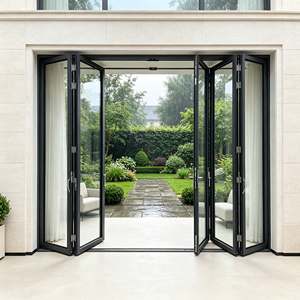
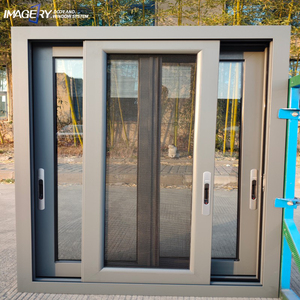
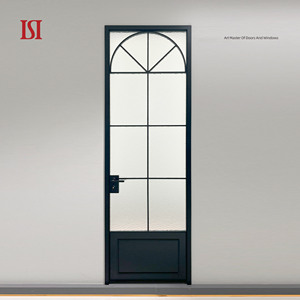
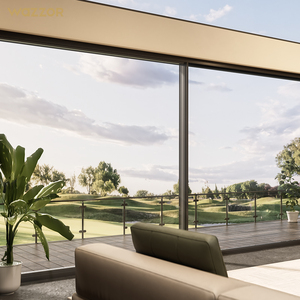
Executive B2B Procurement Analysis: The Chinese Aluminum Entrance Door Ecosystem
Global commercial real estate developers, architectural specifiers, and fenestration distributors are increasingly turning to China’s top aluminum front door factories to meet stringent structural, aesthetic, and thermal requirements. As building codes evolve worldwide—demanding lower U-factors, enhanced air-tightness, and elevated wind-load capacity—the manufacturing base centered in Foshan, Guangdong, has transformed from basic OEM processing into high-end, precision-engineered architectural production.
Choosing the right aluminum entry door supplier requires an understanding of raw material alloys, extrusion technologies, surface finishes, thermal isolation barriers, and hardware integration. High-end aluminum entry doors rely heavily on 6063-T5 or 6063-T6 grade aluminum profiles, offering superior tensile strength, structural rigidity, and corrosion resistance compared to standard architectural metals.
| Engineering Metric | Standard Commercial Grade | High-End Architectural Grade (Kora Standard) | Global Testing Standard Compliance |
|---|---|---|---|
| Alloy Composition | 6063-T5 (Wall thickness 1.2mm - 1.4mm) | 6063-T6 Primary Billet (Wall thickness 2.0mm - 3.0mm+) | ASTM B221 / GB 5237.1 |
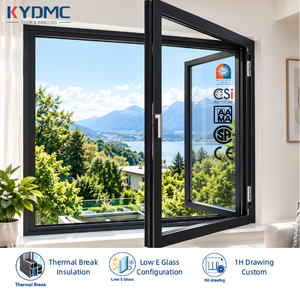
| Thermal Isolation | PVC / Low-grade nylon strips | PA66GF25 (25% Glass Fiber Reinforced Polyamide) | ISO 10077-2 / NFRC 100 |
| Glazing Makeup | Single/Double Monolithic Tempered | Double/Triple Glazed Low-E + Argon Gas + Warm Edge Spacers | IGCC / EN 1279 / AS 2047 |
| Surface Finish Durability | Standard Powder Coating (5-8 Year Life) | PVDF Fluorocarbon / AkzoNobel Qualicoat Class 2 (20+ Years) | AAMA 2604 / AAMA 2605 |
| Structural Wind Load | 1500 Pa - 2500 Pa | 3500 Pa - 5000+ Pa (Hurricane Impact Rated) | ASTM E330 / AS 4055 |
Information Gain Insight: The Physics of Polyamide Thermal Break Systems
The primary cause of thermal failure in aluminum doors is aluminum's high thermal conductivity ($K \approx 200 \text{ W/m}\cdot\text{K}$). Premier Chinese factories eliminate thermal bridging by inserting precision-engineered PA66GF25 polyamide thermal break strips between interior and exterior extrusions. Glass-fiber reinforcement ensures the thermal strip matches aluminum's linear thermal expansion coefficient, preventing structural delamination under extreme climate variations ranging from -30°C winter conditions to 60°C direct surface sun exposure.
Future Procurement & Industry Development Trends (2025–2030)
The global fenestration industry is undergoing rapid technological convergence. Importers and commercial procurement directors who align with emerging design and technical trends gain significant market advantages in regional retail and contracting landscapes.
1. Smart Access & Biometric Integration
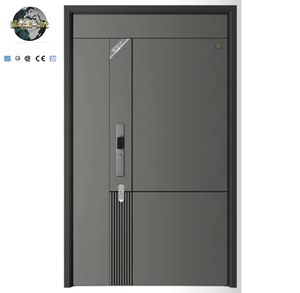
Mechanical keys are rapidly being superseded by hidden motorized multi-point locks featuring embedded 3D facial recognition, biometric fingerprint scanning, and smart-home automation protocols (Matter/Zigbee). OEM manufacturers are building wiring channels directly within extruded door stiles to streamline plug-and-play smart hardware installation.
2. Ultra-Large Scale Heavy-Duty Pivot Systems
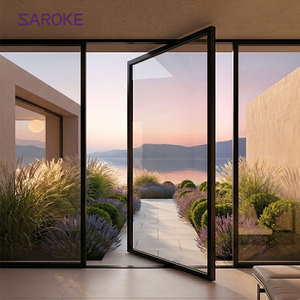
Modern residential architecture favors grand entrance statements. Oversized pivot doors—reaching widths up to 2.5 meters and heights up to 6 meters—require custom floor-spring hardware capable of supporting panel weights exceeding 500kg while maintaining effortless, finger-touch operation and airtight seals.
3. Carbon-Neutral Manufacturing & Circularity
Driven by European CBAM (Carbon Border Adjustment Mechanism) and global green building certifications (LEED, BREEAM), premier Chinese factories are shifting toward low-carbon recycled aluminum billets smelted using hydro-electric energy, accompanied by verified Environmental Product Declarations (EPD).
Enterprise Advantages & Factory Capabilities
Headquartered in the heart of Foshan’s aluminum manufacturing hub, Kora Aluminum Windows & Doors Co., Ltd. operates as an integrated R&D, engineering, and manufacturing enterprise. Serving over 100,000 customers globally across residential, commercial, and hospitality sectors, our business model eliminates redundant intermediary costs while ensuring complete compliance with destination-country structural codes.
End-to-End OEM/ODM Customization
Full engineering flexibility based on client shop drawings, including specialized thermal profiles, custom extrusion die creation, private-label branding, and bespoke powder coating color matching.
Certified Global Standards
Products undergo rigorous batch testing for air infiltration, water penetration resistance, and structural wind loading, matching guidelines set by NFRC (North America), AS 2047 (Australia), and CE (Europe).
Export Packing & Overseas Logistics Support
To prevent ocean transport corrosion and glass breakage, products are secured in fully enclosed, IPPC-certified fumigated wooden crates with protective films, corner guards, and desiccant packs.
Comprehensive B2B Partnership Programs
We offer flexible, non-restrictive dealership models for regional distributors, complete with physical showroom displays, corner sample kits, digital marketing assets, and dedicated technical support.
Frequently Asked Questions (FAQ) for Importers & Buyers
Request third-party material test reports confirming the strip material is PA66GF25 (Polyamide 66 reinforced with 25% glass fiber). Lower-tier factories often substitute PVC or unreinforced nylon, which deteriorates quickly under UV radiation and lacks structural shear strength. Premier factories provide cross-sectional profile samples and formal testing documentation matching ISO 10077 standards.
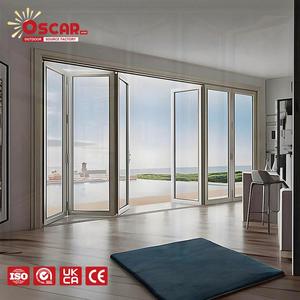
While standard interior aluminum profiles use 1.2mm to 1.4mm wall thicknesses, structural exterior entry doors, pivot doors, and large folding systems require a minimum main profile wall thickness of 2.0mm to 3.0mm. For coastal hurricane zones, structural mullions may require up to 4.0mm reinforced extrusions to withstand severe wind loads.
Yes. All glazing options can be configured to meet specific regional thermal and safety codes. Options include double or triple toughened safety glass, Low-E coatings (such as Solarban 60/70 equivalents), warm-edge insulated spacers, laminated impact glass, and Argon gas filling to achieve U-factors as low as 0.18 BTU/hr·ft²·°F (approx. 1.0 W/m²K).
Leading factories partner with world-class hardware providers such as HOPO, Siegenia, Roto, GU, and Sobinco, alongside premium proprietary smart hardware systems. High-traffic commercial doors utilize heavy-duty 304 stainless steel hinges, multi-point locking gearboxes, and concealed floor pivots rated for over 200,000 open/close cycles.
Fenestration units undergo a multi-layer packaging protocol: 1) Protective anti-scratch film on aluminum surfaces, 2) EPE foam corner protectors, 3) Waterproof bubble wrap, and 4) Full enclosure in non-fumigation plywood crates. Units are strapped inside ocean containers using heavy-duty webbing and timber bracing to prevent shifting during transit.
Standard production lead times range from 25 to 35 business days following CAD shop drawing approval and deposit receipt. For specialized custom powder coating finishes, fluorocarbon colors, or custom glass lamination, lead times may extend by an additional 5 to 10 days.
Partner with China's Premier Fenestration Manufacturer
Looking for custom CAD design support, factory-direct wholesale pricing, or certified project quotations? Submit your project drawings or specifications today to connect directly with our engineering team.