Featured OEM Aluminum Glass Door & Window Series
Engineered to exceed Australian AS2047, North American NFRC, and European CE structural and thermal compliance standards.
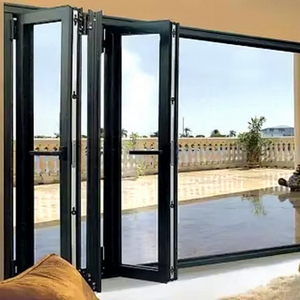
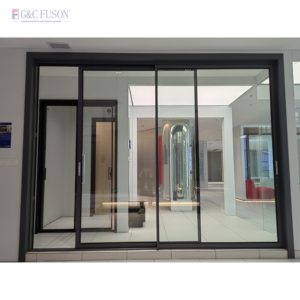
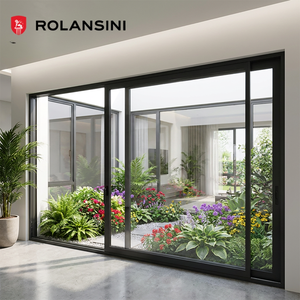
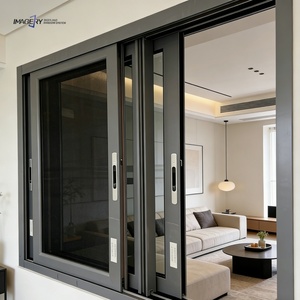
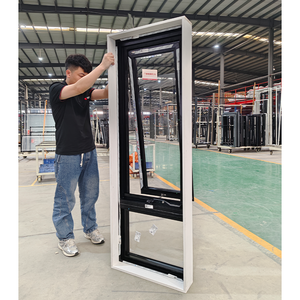
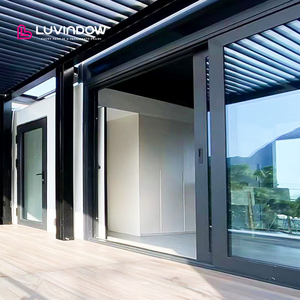
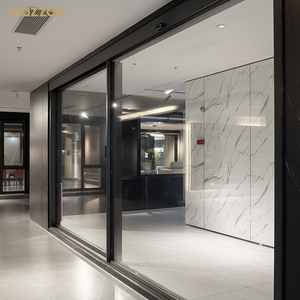
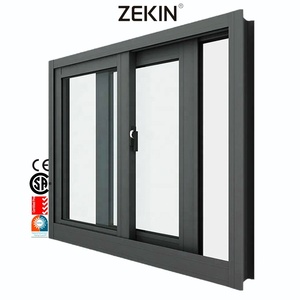
1. Metallurgical & Structural Engineering of Custom OEM Aluminum Door Systems
In modern architectural fenestration, the operational longevity and structural reliability of architectural glass doors depend fundamentally on metallurgical composition and extrusion precision. As a premier Foshan-based OEM aluminum glass door factory and global wholesaler, our manufacturing processes prioritize Architectural Grade 6063-T5 and 6063-T6 aluminum alloys. These specific magnesium-silicon aluminum formulations offer an optimal strength-to-weight ratio, high corrosion resistance, and superb mechanical workability essential for complex profile geometries.
Standard architectural extrusions maintain a minimum profile wall thickness ranging from 2.0mm to 3.0mm for heavy-duty sliding patio doors and multi-panel bi-fold concertina systems. This structural rigidity prevents frame deflection under extreme wind loads, supporting design pressure (DP) ratings exceeding 5000 Pascals (Pa) in hurricane-prone coastal regions.
| Material / Component Parameter | Technical Benchmark Standard | Performance & Operational Value |
|---|---|---|
| Alloy Metallurgy | 6063-T5 / T6 Temper Precision Extrusion | Ultimate tensile strength ≥ 205 MPa; Yield strength ≥ 170 MPa |
| Thermal Insulation Bar | PA66-GF25 Structural Polyamide (25% Glass Fiber) | Prevents thermal bridging; Frame U-factor ($U_f$) reduced to 1.2 - 1.6 W/m²K |
| Glazing Architecture | Dual/Triple Glazed IGU with Soft-Coat Low-E | Argon gas filled (90%+ purity); SHGC controllable from 0.22 to 0.55 |
| Anodizing & PVDF Coating | AAMA 2605 / Qualicoat Class 2 Certified | 3,000+ hours salt spray resistance; UV color retention > 20 years |
| Weather Gaskets & Hardware | Continuous EPDM Gaskets + Hopo / Siegenia Hardware | Air infiltration < 0.1 L/s·m²; Water penetration resistance up to 900 Pa |
Thermal Conductivity Mitigation: PA66-GF25 Polyamide Thermal Break Technology
Uninsulated aluminum frames exhibit high thermal conductivity ($K$-value approx. 200 W/m·K), rendering them susceptible to severe heat transfer and interior surface condensation. To achieve thermal decoupling, high-performance OEM door systems incorporate structural PA66-GF25 polyamide thermal breaks. By crimping a 24mm to 34mm glass-fiber-reinforced polyamide strip between the interior and exterior aluminum profiles, thermal conduction across the frame is restricted, driving overall fenestration U-values down to meets strict IECC, NFRC, and Passive House energy targets.
2. Structural Glazing Analytics & Acoustic Dampening Configurations
The glass unit constitutes over 80% of an aluminum door's total surface area. Engineering an optimal Insulated Glass Unit (IGU) requires matching environmental loads with acoustic dampening requirements:
- Acoustic Isolation (STC / Sound Transmission Class): High-density urban developments require acoustic attenuation. By pairing asymmetric glass thicknesses (e.g., 6mm exterior + 12mm Argon space + 8mm interior) with acoustic Polyvinyl Butyral (PVB) or SGP laminated interlayers, sound reduction metrics achieve Rw 42 to 45 dB, significantly dampening low-frequency traffic noise.
- Solar Heat Gain Coefficient (SHGC) Management: Utilizing double or triple silver soft-coat Low-E glass coatings (such as Solarban or Sunguard series) allows high visible light transmittance (VLT > 65%) while rejecting up to 78% of solar infrared radiation.
- Structural Impact & Hurricane Certification: Glass door assemblies intended for hurricane zones feature hurricane-impact laminated glass capable of passing large missile impact testing (ASTM E1886/E1996) and cyclical wind pressure loads.
Why Global Wholesalers Choose OEM Factory Partnerships
B2B Cost Efficiency & Margins
Bypassing middleman trading networks grants direct access to Foshan's complete raw material supply chain, reducing per-unit costs by 25% to 40% while preserving engineering quality.
Full Customization & Private Labeling
From custom profile dies, anodized color spectrums, and hardware branding to private-label packaging and jobsite-coded protective films.
Verified Regulatory Testing
Complete architectural test dossiers provided per series, covering AS2047 deflection/water pressure, NFRC thermal simulations, and CE structural declarations.
3. Global Procurement Trends in Commercial & High-End Residential Fenestration
The global wholesale market for architectural aluminum doors is undergoing a structural transition driven by strict building energy codes, carbon-neutral mandates, and digitized construction workflows. Wholesalers and developers must navigate four critical trends shaping future procurement strategies:
A. Decarbonization & Low Embodied Carbon Aluminum
Governments across North America and Europe are introducing Environmental Product Declarations (EPDs) as prerequisite documentation for commercial bids. Aluminum smelting is historically energy-intensive; however, modern OEM factories are increasingly utilizing hydro-powered or recycled post-industrial aluminum billets. Procuring low-carbon aluminum profiles (carbon footprint < 4.0 kg CO2e/kg Al) enables developers to earn higher LEED v4 and BREEAM sustainability credits.
B. Industrialized Prefabrication & Jobsite Staging Integration
On-site labor costs in developed markets have escalated dramatically. Consequently, wholesale buyers are requesting factory-assembled knock-down (KD) kits or pre-glazed modular units fitted with pre-drilled installation flanges, integrated perimeter flashing fins, and snap-in interior trims. Standardized factory prep reduces jobsite installation hours by up to 60% while mitigating field waterproofing errors.
C. BIM LOD 350+ Digital Twin Compatibility
Leading architects and general contractors no longer accept generic CAD details. B2B suppliers must provide high-fidelity Building Information Modeling (BIM) objects at Level of Development (LOD) 350 or higher. These digital assets embed accurate thermal performance parameters, structural connection points, and hardware clearance envelopes directly into Revit and IFC files.
Supply Chain Risk Mitigation for Wholesalers & Distributors
To avoid costly shipping container volumetric loss, our factory uses proprietary 3D nesting algorithms for knocked-down (KD) bi-fold and sliding door frames. By packing extruded profiles in steel-reinforced crating alongside custom-crated insulated glass units, we maximize container space utilization by up to 35%, substantially reducing ocean freight cost per square meter of glass.
Send an Inquiry4. Next-Generation Design & Product Innovation Trends
The architectural envelope continues to evolve toward total visual transparency, seamless indoor-outdoor transitions, and intelligent automated operation:
- Ultra-Slim Sightlines & Structural Bonding: Minimalist sliding door systems with interlocking stile sightlines as narrow as 18mm to 21mm are replacing bulky traditional frames. These systems rely on structural silicone adhesive bonding (e.g., Dow Corning 983) to transfer wind loads directly from the glass pane to heavy-duty concealed stainless steel bottom tracks.
- Motorized Smart Integration: Automated lift-and-slide and multi-panel folding doors are now routinely connected to KNX, Crestron, or Control4 smart home automation systems. Integrated hidden linear drives, anti-pinch safety sensors, and smart magnetic lock actuators provide silent keyless operation.
- Electrochromic & Vacuum Insulated Glass (VIG) Hybridization: Emerging architectural designs are integrating dynamic smart tinting glass (electrochromic) and Vacuum Insulated Glass (VIG) technology—achieving center-of-glass U-values as low as 0.60 W/m²K in a ultra-thin 10mm profile footprint.
5. Enterprise Advantage: Comprehensive OEM/ODM Manufacturing Capabilities
Operating out of Foshan, Guangdong—the epicenter of global aluminum extrusion manufacturing—our facility combines state-of-the-art automated machinery with rigorous quality control workflows:
Precision Machining & Extrusion Lines
Our production floor spans multi-axis CNC machining centers, automated double-head precision cutting saws, and automatic corner-crimping machines that ensure frame joint tolerances within ±0.2mm. Precision mitering ensures leak-proof frame joinery protected by dual-component corner adhesives and internal cast-aluminum corner keys.
Quality Control & Testing Rigor
Every batch of OEM aluminum doors undergoes a strict 12-stage Quality Assurance protocol prior to crating:
- Raw extrusion spectral alloy verification and anodizing film thickness checks (ISO 2360).
- Thermal break shear strength pull-testing (EN 14024).
- In-factory mockup chamber testing for air infiltration, water tightness under static pressure, and structural load deflection.
- 100% pre-shipment dry assembly verification for smooth roller glide, multi-point locking alignment, and gasket seal compression.
Frequently Asked Questions for OEM Buyers & Wholesalers
Technical clarity on custom engineering, minimum order quantities, shipping logistics, and compliance verification.
What engineering documentation and test reports are provided with OEM orders?
Can you manufacture custom aluminum door extrusion dies based on proprietary CAD drawings?
How do you ensure water tightness and air tightness on large bi-fold and sliding patio doors?
What hardware brands and multi-point locking systems are integrated?
What packaging and export protection measures are used for ocean freight?
What are the standard production lead times for wholesale container orders?
Partner with a Trusted OEM Aluminum Glass Door Factory
Request a detailed factory direct quotation, request custom profile samples, or schedule a technical consultation with our fenestration engineering team today.
Send an Inquiry