Featured OEM/ODM Door & Window Systems
Precision-engineered aluminum entrance doors, sliding systems, and casement solutions tested to international AS2047, NFRC, and CE standards.
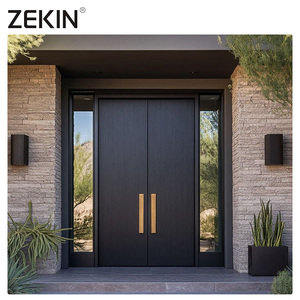
ZEKIN Custom Large House Metal Front Entrance Double Door Modern Security Armored Aluminum Exterior Door
View Details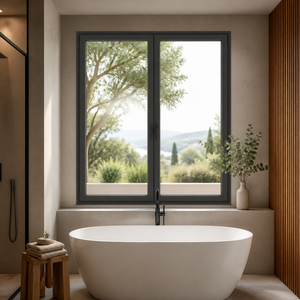
Professional Casement Aluminum Doors Windows Noise Reduction Waterproof Easy Maintenance for Balcony
View Details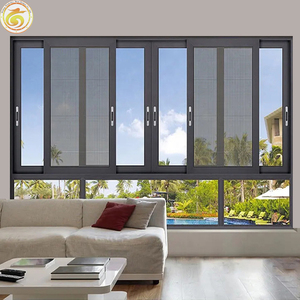
Soundproof Aluminum Standard Double Glass Sliding Window Manufacturer Thermal Break Aluminum
View Details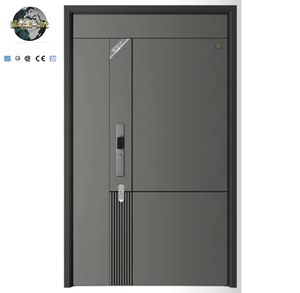
Modern Minimalist Security Entry Door Anti-Theft Aluminum Alloy Construction Side Opening Commercial Outdoor Door
View Details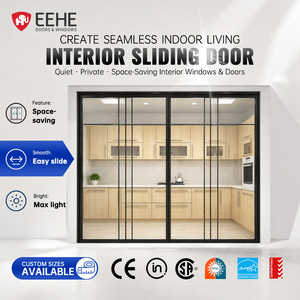
EEHE CE Certified Aluminum Sliding Door Modern Minimalist Double Glazed Trackless Sliding Door for Apartment
View Details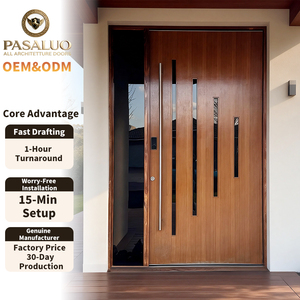
2026 OEM PSL Soundproof Burglar Aluminum Glass Home Villa Residential Entrance Security Front Entry Exterior Door
View Details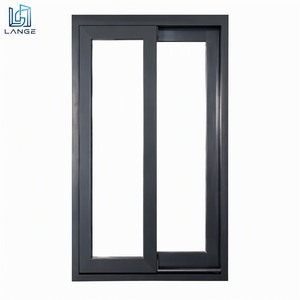
Manufacturer Aluminium Windows Double Glass Aluminum Window Residential House Aluminum Alloy Sliding Window
View Details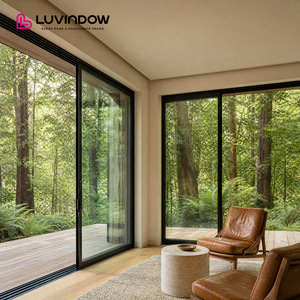
Hot Sale Modern Aluminum Double Glazed or Triple Glass Soundproof Exterior Entry Sliding Doors
View Details1. Strategic Outlook: The Evolving B2B Landscape of Aluminum Door Sourcing
The global architectural fenestration sector is undergoing a profound structural transition. Driven by stringent municipal energy performance codes (such as IECC 2024 in North America and EPBD in Europe), carbon-neutral building directives, and escalating severe weather risks, procurement decision-makers—including commercial contractors, real estate developers, and wholesale distributors—can no longer treat aluminum doors as simple commodity enclosures. Today’s aluminum door assemblies represent complex, engineered envelope systems critical to building envelope integrity, acoustic isolation, structural resilience, and long-term asset value retention.
For B2B buyers evaluating OEM/ODM aluminum door factories and wholesalers, navigating the global vendor ecosystem requires moving beyond surface-level unit pricing. Sourcing direct from tier-one manufacturing hubs like Foshan, Guangdong—China’s primary center for precision aluminum extrusion and structural fabrication—enables procurement teams to achieve exceptional cost-efficiency while accessing state-of-the-art thermal break, multi-point lock security, and surface treatment technologies. However, extracting true strategic value requires a deep operational understanding of technical profile metallurgy, glass insulation make-ups, compliance verification frameworks, and private-label manufacturing capabilities.
2. Macro Procurement Trends in the Global Fenestration Market
When sourcing aluminum entry doors, heavy-duty sliding patio systems, bi-fold doors, and commercial storefront assemblies, commercial buyers must align their procurement schedules with five overarching macro trends reshaping the industry:
Transition from uninsulated profiles to polyamide (PA66 GF25) thermal break struts, reducing linear heat conductivity by over 65% and preventing internal condensation in extreme climate zones.
Integration of multi-point continuous locking mechanisms, European profile key cylinders, heavy-duty security hinges, and steel-armored door core plates for maximum burglar protection.
Engineering minimal frame-to-glass ratios (narrow interlocking stiles down to 20mm) that maximize natural daylighting while maintaining structural wind load deflection capability.
2.1 Structural Thermal Performance & Decarbonization Mandates
Aluminum exhibits an inherently high natural thermal conductivity ($\approx 160-200 \text{ W/m}\cdot\text{K}$). Uninsulated aluminum frames act as massive thermal bridges, causing significant HVAC energy losses and severe interior moisture condensation. Modern OEM/ODM aluminum door factories mitigate this by precision-crimping high-density Polyamide 66 reinforced with 25% glass fiber (PA66 GF25) thermal barriers between the interior and exterior aluminum profile extrusions.
Paired with Argon-filled, low-emissivity (Low-E) double or triple Insulated Glass Units (IGUs) utilizing warm-edge composite spacers, high-tier thermally broken aluminum doors achieve overall assembly thermal values of $U \le 1.4 \text{ W/m}^2\cdot\text{K}$ ($U \approx 0.25 \text{ BTU/h}\cdot\text{ft}^2\cdot^\circ\text{F}$), seamlessly meeting strict green building certifications including LEED v4.1, BREEAM, and PASSIVHAUS targets.
2.2 Extreme Weather & Impact-Resistant Engineering
With coastal urban centers experiencing heightened storm surges and typhoon-force wind loads, major wholesalers and project contractors now mandate rigorous structural testing. Leading Foshan OEMs engineered reinforced 6063-T5 and 6060-T6 primary alloy wall thicknesses ranging from 2.0mm for standard sliding doors to 3.0mm+ for heavy-duty commercial entrance pivot and bi-fold systems.
These extrusions undergo finite element analysis (FEA) to verify structural resistance under extreme design pressures ($p_3 \ge 4000 \text{ Pa}$), satisfying hurricane impact mandates (such as Florida Miami-Dade NOA or Australian AS 2047 cyclic storm standards) when combined with PVB or SGP laminated safety glazing.
3. Key Product Categories & Technological Evolutions
As a specialized factory and wholesale supplier, Kora Aluminum Windows & Doors Co., Ltd. manufactures a broad portfolio of custom architectural fenestration products. Understanding the specific mechanical characteristics of each category ensures correct specification across diverse project schedules:
| Door / System Category | Structural Profile Thickness | Thermal Break Tech | Acoustic Insulation (STC) | Typical B2B Applications |
|---|---|---|---|---|
| Armored Security Entrance Doors | 2.5mm - 3.5mm Armored Alloy | Polyurethane Core + PA66 | STC 42 - 48 dB | Luxury Villas, Executive Residences, High-Security Main Entry |
| Lift & Slide Patio Doors | 2.0mm - 2.5mm Primary Wall | 24mm - 34mm PA66 Struts | STC 38 - 43 dB | High-End Oceanfront Resorts, Balconies, Penthouses |
| Heavy-Duty Bi-Fold Doors | 2.0mm Architectural Grade | 20mm PA66 Insulation | STC 35 - 40 dB | Restaurant Patios, Commercial Storefronts, Indoor-Outdoor Spaces |
| Minimalist Trackless Sliding Doors | 1.8mm - 2.0mm Ultra-Slim | Optional Internal Break | STC 32 - 36 dB | Interior Room Partitions, Modern Apartment Bedrooms |
| Casement & Balcony Door Systems | 1.6mm - 2.0mm Heavy Wall | Continuous EPDM Gasket + PA66 | STC 40 - 45 dB | Multi-Family Residential, Hotel Guestrooms, Coastal Condos |
3.1 Armored Aluminum & Security Front Entrance Doors
Modern architectural residential designs demand imposing, high-impact front entry statements without sacrificing anti-theft security. Factory-engineered custom armored aluminum double front entry doors merge heavy-gauge structural aluminum skins with internal structural steel ribs and high-density polyisocyanurate acoustic core insulation. Features include dynamic multi-point gear-driven locking bolts, heavy-duty 3D adjustable concealed hinges capable of supporting leaf weights exceeding 350 kg, and smart biometric access integration (fingerprint, keypad, RFID, and smart home automation protocol connection).
3.2 Lift-and-Slide & Heavy-Duty Patio Door Systems
For expansive oceanfront and resort openings, traditional inline sliding doors suffer from high track friction and air leakage. Advanced OEM lift-and-slide door systems solve this via a specialized stainless steel gear mechanism: turning the handle rotates internal cams that lift the entire door leaf up to 10mm off the bottom weather-sealing tracks, enabling effortless single-handed gliding of glass panels weighing up to 400 kg. When locked, the leaf drops back down, compressing multi-layered EPDM acoustic gaskets against the sill to deliver exceptional water tightness ($\ge 700 \text{ Pa}$) and air infiltration resistance.
3.3 Surface Finishing Technologies: Anodizing, PVDF & Powder Coating
Corrosion resistance is paramount for long-term operational lifespan. Premier Chinese factories utilize four main industrial finishing lines:
- Qualicoat Class 2 Electrostatic Powder Coating: Offers exceptional color uniformity across endless RAL colors, with UV resistance tested to withstand 5+ years of intense solar exposure without significant gloss loss.
- Fluorocarbon (PVDF / Kynar 500) Coating: A 3-coat/2-bake liquid spray system containing 70% fluorocarbon resin, providing superior resistance to severe salt-spray marine atmospheres (C4/C5 atmospheric corrosion categories per ISO 12944).
- Anodizing (Class 25): Electrolytic oxide surface treatment (thickness $\ge 25 \mu\text{m}$) that permanently locks in metallic silver, bronze, or champagne tones while achieving surface hardness second only to diamond.
- 3D Vacuum Heat Transfer Wood-Grain: Delivers authentic timber visual textures with the structural permanence, zero maintenance, and non-flammability of architectural aluminum.
4. Enterprise Advantages: Kora’s Manufacturing & Supply Infrastructure
Located in Shishan Town, Nanhai District, Foshan City—the undisputed epicenter of global aluminum manufacturing—Kora Aluminum Windows & Doors Co., Ltd. operates as a true factory-direct original equipment manufacturer (OEM) and original design manufacturer (ODM). Spanning over a decade of dedicated production expertise, Kora provides an integrated manufacturing framework supporting architects, contractors, dealers, and project developers worldwide.
Complete flexibility across profile dies, extrusion wall thicknesses, thermal strip depths, glass build-ups, hardware brand sourcing, color matching, and private-label logo packaging.
ISO 9001 certified production lines accompanied by verifiable test reports for structural load, water tightness, air infiltration, and overall U-factor metrics per project schedule.
Full export packaging including customized fumigated timber crates, steel-banded corner protectors, moisture-barrier wrapping, and optimized container loading plans.
4.1 Global Project References & Proven Track Record
Kora’s engineering capabilities are demonstrated across diverse worldwide project deployments:
- North America (Indianapolis, Indiana, USA): Private luxury homes and custom residential villas fitted with high-efficiency thermally broken window-door combinations tested for severe winter conditions.
- Caribbean (Kingston, Jamaica): Large-scale oceanfront villa groups requiring hurricane-rated impact laminated glass doors resistant to intense marine salt air.
- South Asia (Indore, India): Premium multi-story hotel developments utilizing high-STC soundproof casement and balcony door assemblies.
- Middle East (Muscat, Oman): High-density multi-family residential complexes demanding high-solar-reflective Low-E glazing and heat-resistant thermal profile systems.
- East Asia (Chow Tai Fook Mansion, Hong Kong): Urban luxury apartment projects requiring ultra-slim sightline sliding systems tailored for compact structural openings.
5. Technical Sourcing FAQ: Critical B2B Buyer Checklist
Below are detailed responses to the most critical technical and operational questions encountered during B2B procurement of aluminum door systems:
How do standard aluminum profiles compare against thermally broken profiles in structural door applications?
What extrusion aluminum alloy tempers are specified for heavy-duty commercial doors?
How does Kora support private-label OEM and ODM programs for distributors?
Which glass make-ups are recommended for acoustic insulation in city or airport environments?
What testing documentation is provided prior to container shipment dispatch?
How are glass panels and aluminum frames packaged to prevent transit damage during ocean freight?
Can Kora manufacture door systems matching regional building hardware standards (e.g., European profile locks vs North American mortise locks)?
What is the typical production lead time for custom OEM bulk door orders?
Partner with a Trusted OEM/ODM Aluminum Door Manufacturer
Direct factory supply, verified structural engineering, custom architectural drawings, and reliable global project shipping. Contact our engineering team today for immediate quote evaluation.