1. Sourcing from Top China Aluminium Louvre Doors Factories & Wholesalers: Market Overview
In contemporary architectural design and commercial construction, aluminium louvre doors and fenestration systems have evolved from simple ventilation grilles into high-performance structural enclosures. As energy codes become more stringent globally and exterior aesthetic demands lean toward minimalist, metallic, and functional facades, international project developers, general contractors, and wholesalers are increasingly turning to China's leading manufacturing clusters—specifically located in Foshan, Guangdong.
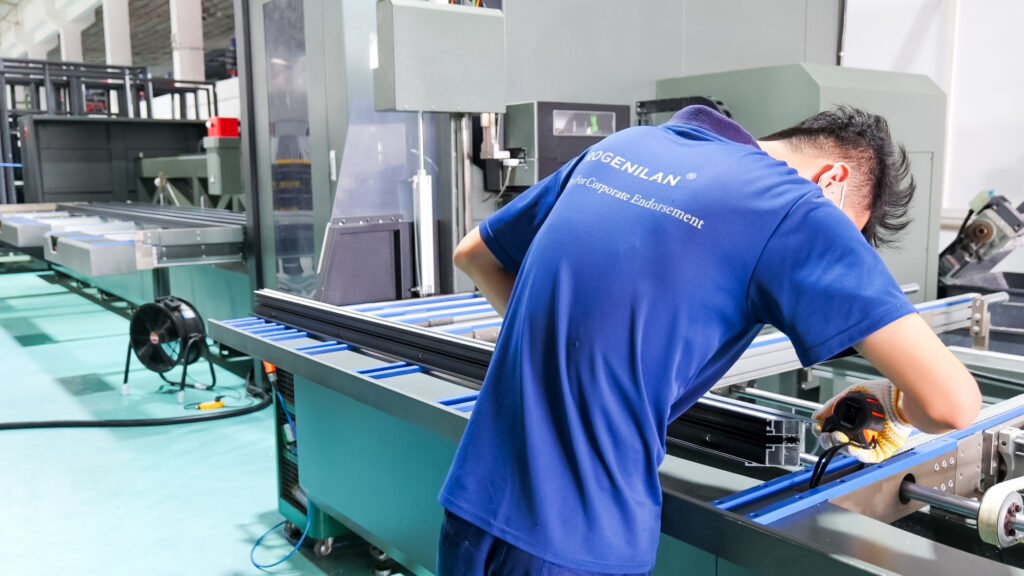
China accounts for over 50% of the world's architectural aluminium extrusion output. However, identifying a reliable factory versus an intermediary trading house requires a deep understanding of manufacturing capabilities, alloy metallurgical standards, finishing processes, and international compliance frameworks. Leading Foshan manufacturers, such as Kora Windows & Doors, operate under integrated manufacturing systems combining primary aluminium billet extrusion, precision CNC machining, automated corner crimping, surface treatment (PVDF, Anodizing, Powder Coating), and rigorous structural testing.
2. Structural Engineering & Technical Material Specifications
To evaluate the top China aluminium louvre door manufacturers, B2B buyers must analyze the fundamental material science and mechanical properties engineered into the louvre assemblies. A high-gain procurement strategy evaluates three core pillars:
A. Metallurgical Composition & Profile Wall Thickness
Premier louvre doors utilize high-grade 6063-T5 or 6063-T6 structural aluminium alloy. T6 temper profiles offer elevated tensile strength (up to 205 MPa) compared to T5 (175 MPa), making them essential for high-wind coastal environments and high-rise plant room enclosures. Wall thickness must strictly adhere to structural load requirements: main load-bearing outer frames should maintain a minimum nominal thickness of 2.0mm to 3.0mm, while individual aerofoil or Z-shaped louvre blades should measure between 1.4mm and 2.0mm to prevent dynamic flutter and resonance under cyclic wind pressure.
B. Aerodynamic Performance, Free Area Percentage & Water Resistance
The primary functional metric of any louvre door is its balance between Free Area Percentage (FAP) and water ingress mitigation. Standard single-bank Z-blade louvres achieve approximately 45% to 55% free area, ideal for standard mechanical ventilation. However, storm-proof or dual-bank aerofoil louvre doors feature drainable blade troughs and vertical jamb stiles that channel rainwater downward to exterior sills, achieving EN 13030 Class A rain defense even under 13 m/s wind-driven rain scenarios while maintaining optimal airflow (CFM) for HVAC condenser equipment.
C. Advanced Surface Treatments for Corrosive Environments
Commercial buyers ordering for tropical resort projects, coastal villas, or industrial chemical facilities must select surface finishes tested under accelerated salt spray conditions (ASTM B117):
- Fluorocarbon (PVDF / Kynar 500) Coating: 3-coat or 4-coat systems providing superior resistance to UV degradation, chalking, and salt fog corrosion. Guaranteed lifespan exceeds 20 to 25 years.
- Architectural Powder Coating (Qualicoat Class 2 & 3): Offers exceptional impact resistance and scratch protection with over 200 RAL color selections in textured, matte, or metallic gloss aesthetics.
- Anodizing (Class 25 / 25 Microns): Converts the aluminium surface into a durable aluminum oxide layer, delivering an authentic metallic satin finish impervious to peeling or flaking.
Thermal Break Integration
Incorporating PA66GF25 polyamide thermal barriers into louvre door outer sub-frames reduces overall thermal bridging, preventing interior surface condensation in air-conditioned plant rooms.
Multi-Point Security Locking
Heavy-duty commercial louvre doors feature European multipoint lock gearboxes, anti-lift security pins, and reinforced stainless steel hinges capable of supporting sash weights up to 250kg.
Acoustic Attenuation Baffles
Equipped with internal mineral wool sound-absorbing baffles and perforated blade undersides, acoustic louvre doors reduce noise transmission from generators and chillers by 15 to 25 dB(A).
3. Comparative Technical Matrix: Louvre Door Typologies
To streamline architectural specification, the following comparison matrix details the primary mechanical and performance metrics across different aluminium louvre door configurations manufactured in China:
| Louvre Door Type | Primary Blade Profile | Free Area % | Water Resistance (EN 13030) | Typical Applications | Operability Options |
|---|---|---|---|---|---|
| Fixed Aerofoil Louvre Door | Elliptical Aerofoil (100mm–300mm) | 50% – 60% | Class C (Moderate) | Commercial Facades, Plant Rooms, Refuse Enclosures | Static / Fixed Position |
| Operable Variable Louvre Door | Z-Shape / Double Drainable | 40% – 50% | Class B (High Defense) | HVAC Equipment Rooms, Power Sub-Stations | Manual Lever, Linear Actuator, BMS Sync |
| Glass-Integrated Louvre Door | Tempered Glass Blades + Alu Frame | 35% – 45% | Class B (Sealed Gaskets) | Luxury Residential Balconies, Bathroom Ventilation | Hand Crank, Friction Pivot, Motorized |
| Acoustic Louvre Door | Insulated Aerofoil with Acoustic Infill | 30% – 40% | Class B (High Defense) | Generator Enclosures, Chiller Rooms, Factory Plant | Static / Heavy Duty Swing |
| Hurricane Impact Louvre Door | Reinforced Heavy-Duty T6 Extrusion | 45% – 50% | Class A (Maximum Weatherproofing) | Coastal High-Rise, Tropical Island Resorts | Single / Double Swing, Sliding, Bi-Fold |
4. Global Procurement & Sourcing Trends (2026–2030)
As the international building envelope market shifts toward decarbonization, digital fabrication, and extreme weather resilience, wholesale buyers sourcing aluminium doors and louvres from China must adapt to four pivotal industry trends:
Trend 1: Smart BMS-Connected Automated Actuation
Static ventilation is rapidly being replaced by dynamic building management system (BMS) integration. Modern commercial projects require louvre doors fitted with 24V DC electric linear actuators that automatically adjust blade pitch based on indoor air quality (CO2 sensors), ambient outdoor temperature, dynamic wind load sensors, or fire alarm smoke-evacuation triggers. Top Chinese wholesalers provide pre-wired actuator conduits, CE-marked motor gearboxes, and RS485 communication protocols ready for plug-and-play installation.
Trend 2: Low-Carbon Recycled Aluminium & Green Building Certification
With LEED v4.1 and BREEAM standards demanding environmental product declarations (EPDs), leading Foshan factories are adopting hydroelectric-smelted low-carbon primary aluminium and pre-consumer recycled alloys. Sourcing from manufacturers with verified EPD documentation allows developers to claim crucial credits under Materials & Resources (MR) categories while reducing embodied carbon footprint by up to 60%.
Trend 3: Prefabricated Modular Fenestration & DfMA
On-site labor shortages in North America, Australia, and Europe have increased demand for Design for Manufacture and Assembly (DfMA). China's top factories now export fully factory-assembled louvre door sub-frames complete with perimeter sub-frames, integrated flashing, perimeter EPDM weather seals, and pre-drilled fixing cleats. This cuts installation time on site by over 70% while guaranteeing factory-controlled quality seal integrity.
Trend 4: Customization via DFM (Design for Manufacturing) Co-Engineering
Wholesalers no longer buy standard off-the-shelf sizes. The market demands bespoke extrusion die development where China factories modify profile wall geometry, integrate concealed fly screens (stainless steel 316 mesh or fiberglass), and incorporate concealed drainage channels to meet custom architectural elevation drawings without prohibitive tooling costs.
5. Factory Evaluation Protocol: How to Audit China Wholesalers
Before executing a high-value purchase order with a Chinese manufacturer, procurement managers should implement a standardized six-point audit framework to mitigate financial and quality risks:
1. Raw Material Billet Certification
Verify mill test certificates (MTC) proving the use of Grade A primary aluminium ingot (A00 grade) rather than scrap metal re-melt, which contains excess impurities leading to brittle extrusion fractures.
2. Structural Test Report Traceability
Ensure test reports for wind pressure resistance (ASTM E330 / AS 2047) and water penetration match the exact frame depth, alloy temper, and louvre blade profile series being ordered.
3. Surface Coating Film Thickness Verification
Demand magnetic gauge film thickness readings during pre-shipment inspection: Powder coating must measure 60–80 µm; PVDF coatings must measure 30–45 µm; Anodizing must exceed 20 µm.
4. Corner Crimping & Joint Sealant Integrity
Inspect internal corner joints. Top factories utilize cast aluminium corner cleats injected with dual-component polyurethane joint sealant to prevent water seepage through frame miter cuts.
6. Strategic Enterprise Advantages: Partnering with Kora Windows & Doors
As an industry benchmark based in Shishan Town, Nanhai District, Foshan City—the epicenter of global aluminium extrusion manufacturing—Kora Aluminum Windows & Doors Co., Ltd. provides commercial developers, architects, and wholesale distributors with an uncompromised, factory-direct supply chain.
- Complete Whole-Home & Commercial Portfolio: From heavy-duty motorized exterior louvre doors to slim-frame patio sliders, hurricane-impact folding doors, garage doors, skylights, and sunrooms.
- Global Certification Alignment: Engineered to satisfy Australian AS 2047, North American NFRC, European CE, and ISO 9001 certified quality management system protocols.
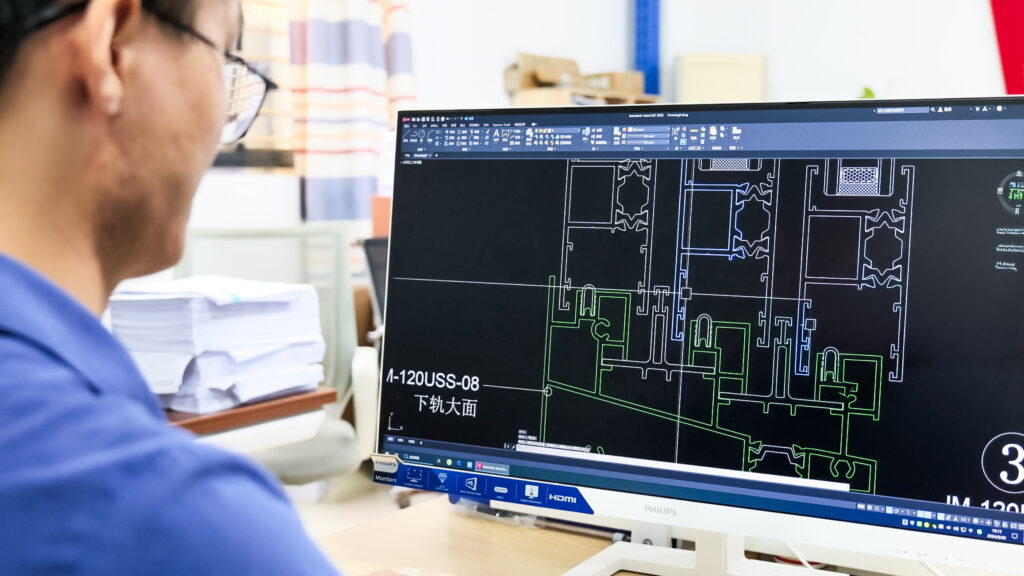
- End-to-End Engineering Support: In-house CAD/BIM technicians produce shop drawings, structural wind load calculations, thermal simulation reports, and custom extrusion die development.
- Export Packaging Standards: Multi-layer protective packaging combining scratch-resistant surface PE film, edge corner protectors, bubble wraps, and fumigated steel-reinforced plywood crates ensuring zero transit damage.
Global Engineering Project References
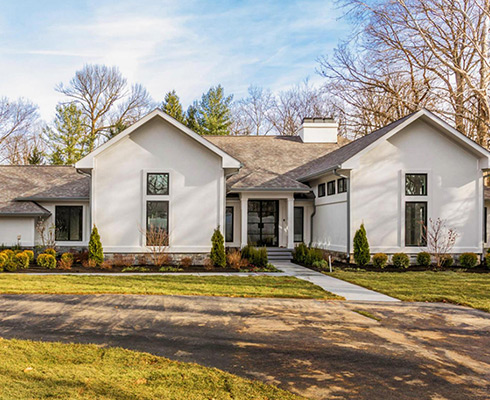
Residential Estate
Location: Indianapolis, USA
Products: Thermally Broken Windows & Exterior Plant Louvre Doors
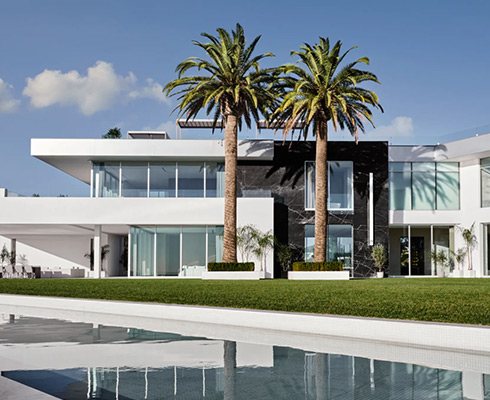
Luxury Villa Development
Location: Kingston, Jamaica
Products: Hurricane Impact Bi-Fold Doors & Security Louvre Systems
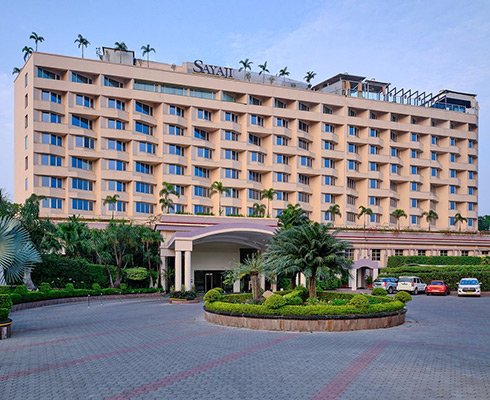
Commercial Hotel Complex
Location: Indore, India
Products: Heavy-Duty Acoustic Plant Room Louvre Enclosures